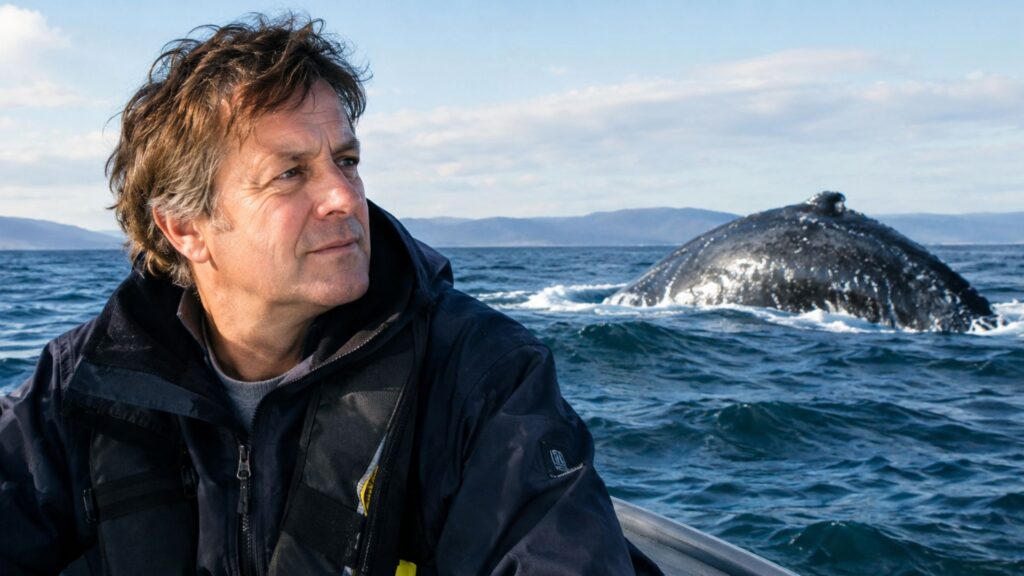

Philip Hoare is an English writer, author, journalist, filmmaker and curator whose work has brought together literature, art, history and the natural world. He is particularly recognized for his writing about the sea and whales, subjects that have played a major role in his literary career. From biographies of influential cultural figures to award-winning explorations of marine life, Hoare has developed a distinctive style that combines personal observation with historical and literary research. His fascination with whales, in particular, has become closely associated with his name following the success of his celebrated book Leviathan or, The Whale.
| Quick Bio | Details |
|---|---|
| Full Name | Philip Hoare |
| Born | 1958 |
| Birthplace | Southampton, England |
| Profession | Writer, Author, Journalist, Filmmaker and Curator |
| Nationality | British |
| Known For | Leviathan or, The Whale |
| Major Subject Interests | Whales, the sea, literature, art and natural history |
| Award | Samuel Johnson Prize for Non-Fiction, 2009 |
| Academic Connection | University of Southampton |
| Notable Work | Leviathan or, The Whale |
Early Life and Interest in the Sea
Philip Hoare was born in Southampton, a port city on England’s south coast, in 1958. His upbringing in a place strongly connected with the sea helped shape an interest that would later become central to his writing. Southampton’s maritime history and position as an important port provided a natural setting for someone who would eventually devote considerable attention to oceans, ships and marine creatures.
Hoare’s interests, however, have never been limited to natural history. His writing demonstrates a fascination with the relationship between humans and the natural world, while literature, painting, biography and cultural history frequently appear alongside his observations of nature. This combination has helped distinguish his work from conventional nature writing.
Developing a Career as a Writer
Before becoming internationally known for his books about whales and the sea, Hoare established himself through biographies and works of cultural history. One of his early significant books was Serious Pleasures: The Life of Stephen Tennant, which examined the life of the English aristocrat and social figure Stephen Tennant.
Hoare subsequently wrote Noël Coward: A Biography, exploring the life and career of the celebrated English playwright, actor, composer and performer. His interest in personalities from cultural history showed his ability to move between biography, social history and literary storytelling.
His later books increasingly reflected his fascination with the natural world. Rather than treating nature as something separate from culture, Hoare often explores the ways artists, writers and societies have imagined and represented it.
Leviathan or, The Whale
The book that transformed Philip Hoare’s public profile was Leviathan or, The Whale, first published in 2008. The work examines whales through a combination of natural history, personal experience, cultural history and literature.
A major influence on the book is Herman Melville’s Moby-Dick, the classic American novel about Captain Ahab’s obsessive pursuit of the great white whale. Hoare’s interest in Melville allows him to explore not only the physical reality of whales but also the powerful place they occupy in human imagination.
Leviathan became a major critical success and won the 2009 BBC Samuel Johnson Prize for Non-Fiction, one of Britain’s most prestigious awards for nonfiction writing. The prize significantly increased Hoare’s profile and established him as an important contemporary writer of literary nonfiction.
The success of the book also demonstrated the broad appeal of his approach. Hoare was not simply writing a scientific account of whales. He was examining the connections between animals, literature, history, memory and human identity.
Writing About the Ocean
The sea remains one of the strongest recurring themes throughout Hoare’s work. His books often approach the ocean as both a physical environment and a source of cultural imagination.
The Sea Inside continued his exploration of the marine world, combining travel, natural history and personal reflection. His writing frequently moves between the observable world and the stories people have created around it.
Another notable work, RISINGTIDEFALLINGSTAR, further explored the relationship between humans and the ocean. Hoare’s prose often encourages readers to think about the sea not simply as a distant landscape but as an essential part of the planet’s history and the human imagination.
His work on whales has also contributed to wider public interest in marine conservation and the cultural significance of these animals. His writing demonstrates how storytelling can make scientific and environmental subjects accessible to general readers.
Art, Literature and Natural History
Although whales and the sea are strongly associated with Philip Hoare, his interests extend into art and literary history. His book Albert & the Whale examines the work of Renaissance artist Albrecht Dürer and uses the artist’s encounter with the natural world as a starting point for a wider exploration of art, imagination and nature.
This approach reflects an important characteristic of Hoare’s writing: he frequently connects subjects that might initially appear unrelated. A painting can lead to a discussion about an animal, while a literary work can become a way of considering environmental change.
His later work has also included an exploration of William Blake. William Blake and the Sea Monsters of Love, published in 2025, continues his interest in combining art, poetry, imagination and the natural world.
Broadcasting and Film
Hoare’s career has not been restricted to books. He has also worked in broadcasting and film, using visual storytelling to explore subjects related to literature, history and nature.
He wrote and presented the BBC Arena film The Hunt for Moby-Dick, reflecting his continuing fascination with Herman Melville and the cultural history surrounding Moby-Dick. His work in film has allowed him to explore ideas that also appear throughout his books, particularly the relationship between people, stories and the natural environment.
He has also directed short films connected with whale-related projects, demonstrating his interest in bringing marine subjects to audiences through different forms of media.
Teaching and the University of Southampton
Education has been another important part of Hoare’s professional life. He taught creative writing at the University of Southampton and played a significant role in the university’s creative writing community, particularly in the area of nonfiction.
His association with Southampton is especially fitting given his personal connection with the city and the importance of the sea in his work. Following his retirement from teaching, the University of Southampton established the Philip Hoare Prize for Non-Fiction, recognizing his contribution to creative nonfiction and encouraging new writers.
The Moby-Dick Big Read
Hoare’s enthusiasm for Melville’s Moby-Dick also contributed to the Moby-Dick Big Read, an ambitious project that brought together recordings of the novel by a wide range of contributors. The project demonstrated how a classic literary work could be introduced to modern audiences through digital media and public participation.
It also reflected Hoare’s broader approach to literature: books can become starting points for conversations about history, art, nature and contemporary life.
Philip Hoare’s Literary Legacy
Philip Hoare’s career is notable for the way he crosses traditional boundaries between genres. He has written biographies, nature writing, cultural history and literary nonfiction while also working in television, film and education.
His fascination with whales has become perhaps his most recognizable literary theme, but reducing his work solely to whale writing would overlook the breadth of his interests. His books repeatedly return to larger questions about humanity’s relationship with nature and the ways literature and art influence how people understand the world.
Through books such as Leviathan or, The Whale, Hoare has shown that nonfiction can be deeply personal while remaining grounded in history and research. His work invites readers to look again at subjects they may think they already understand, whether that subject is a whale, a painting, a poet or the ocean itself.
For readers interested in writers who combine cultural history with the natural world, Philip Hoare offers a distinctive and thoughtful body of work. His career continues to demonstrate the possibilities of nonfiction when literature, art and nature are allowed to meet. For more engaging stories about notable people, culture and subjects beyond the ordinary, The Pure Magazine brings together articles designed to inform and interest its readers.
FAQs About Philip Hoare
Who is Philip Hoare?
Philip Hoare is an English writer, author, journalist, filmmaker and curator known particularly for his books about whales, the sea, literature, art and natural history.
When was Philip Hoare born?
Philip Hoare was born in 1958 in Southampton, England.
What is Philip Hoare best known for?
He is best known for Leviathan or, The Whale, a critically acclaimed nonfiction book about whales, the sea, literature and human relationships with the natural world.
Did Philip Hoare win a major literary award?
Yes. Leviathan or, The Whale won the 2009 BBC Samuel Johnson Prize for Non-Fiction.
What is Philip Hoare’s connection with Herman Melville?
Hoare has a longstanding fascination with Herman Melville’s Moby-Dick. Melville’s novel and its depiction of whales are important influences on Leviathan or, The Whale.
Did Philip Hoare work at a university?
Yes. He taught creative writing at the University of Southampton, with a particular connection to nonfiction writing.
What subjects does Philip Hoare write about?
His work covers whales, the ocean, natural history, literature, art, biography, cultural history and humanity’s relationship with the natural world.
What is Philip Hoare’s recent book?
One of his recent books is William Blake and the Sea Monsters of Love, published in 2025.
You May Also Readr https://thepuremagazine.co.uk/