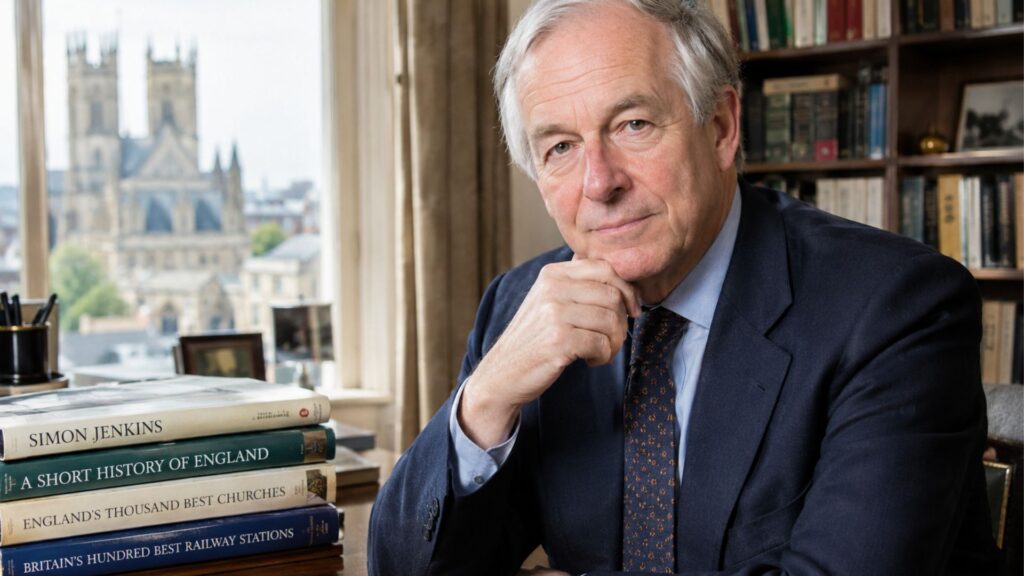

Sir Simon Jenkins is one of Britain’s best-known journalists, authors and commentators, with a career spanning more than five decades. Recognised for his sharp political analysis and deep interest in British history, architecture and heritage, he has held influential editorial positions and written numerous books about the country’s cultural landscape. From editing major newspapers to campaigning for the preservation of historic places, Simon Jenkins has developed a distinctive public voice that combines journalism with a strong appreciation for Britain’s past.
Quick Bio
| Detail | Information |
|---|---|
| Full Name | Simon David Jenkins |
| Date of Birth | 10 June 1943 |
| Place of Birth | Birmingham, England |
| Profession | Journalist, Author, Columnist, Broadcaster |
| Education | St John’s College, Oxford |
| Known For | Journalism, books on history and heritage, newspaper editing |
| Notable Editorial Roles | Editor of the Evening Standard and The Times |
| National Trust Role | Chairman, 2008–2014 |
| Honour | Knighted in 2004 |
| Nationality | British |
Early Life and Education
Simon David Jenkins was born on 10 June 1943 in Birmingham, England. He attended Mill Hill School before continuing his education at St John’s College, Oxford. His academic background helped establish the foundation for a career that would eventually move between journalism, politics, history and cultural commentary.
Rather than focusing on one narrow area, Jenkins developed an interest in the wider issues shaping British public life. His career would later demonstrate this broad range, as he became equally comfortable discussing political developments, newspapers, historic buildings, transport and national heritage.
Beginning a Journalism Career
Jenkins began his professional career in journalism at Country Life and subsequently worked in a number of important publishing positions. His early experience included work with the Times Educational Supplement and The Economist before he moved into more senior newspaper roles.
His career developed during a period when British newspapers played a particularly powerful role in public debate. Jenkins became known not only as a writer but also as an editor who could shape the direction and tone of a publication.
One of his notable early editorial positions was at the Evening Standard, where he served as editor from 1976 to 1978. This experience gave him valuable insight into the competitive world of British newspaper journalism and strengthened his reputation within the industry.
Editor of The Times
One of the most prominent chapters of Jenkins’ career came when he became editor of The Times. He held the position from 1990 to 1992, taking responsibility for one of Britain’s most historically significant newspapers.
His period at The Times came during an important period of political and social change in Britain. Newspaper editors were expected to respond quickly to major national developments while maintaining the identity and credibility of their publications.
Although his tenure was relatively short, the position remains an important part of his professional biography. It established Jenkins as one of the leading figures in British journalism and added considerably to his public profile.
A Long Career as a Commentator
After his major editorial positions, Jenkins continued to build a career as a columnist and commentator. His writing has appeared in prominent British publications, and he became particularly associated with the Guardian, where his columns have covered a wide variety of political and social subjects.
His journalism is often characterised by strong opinions and an interest in challenging conventional thinking. British politics, government policy, education, transport, public institutions and cultural issues are among the subjects he has addressed.
Jenkins’ work has also demonstrated that journalism can extend beyond immediate political events. His writing about historic buildings, landscapes and architecture has become an important part of his identity as a public intellectual.
Simon Jenkins and British Heritage
Heritage is perhaps one of the most distinctive areas of Jenkins’ career. He has written extensively about Britain’s churches, cathedrals, houses, railway stations and architectural history.
His book England’s Thousand Best Churches became particularly well known among readers interested in historic religious buildings. He followed this with other major works, including England’s Thousand Best Houses and England’s Cathedrals.
Jenkins has consistently argued that Britain’s historic environment deserves careful protection. His approach is not limited to famous monuments. He has frequently drawn attention to ordinary buildings, landscapes and local places that contribute to the character of British communities.
His involvement with the National Trust further reflected this commitment. Jenkins served as chairman of the organisation from 2008 to 2014, giving him an influential role in discussions about conservation, access and the future of Britain’s historic places.
Books and Historical Writing
Jenkins has produced a substantial collection of books exploring British and European history. His titles include A Short History of England, A Short History of Europe and A Short History of London.
He has also written about architecture in A Short History of British Architecture and explored Britain’s railway heritage in Britain’s Hundred Best Railway Stations. His book The Celts examines the history and identity associated with Celtic peoples.
A major strength of his historical writing is its accessibility. Instead of treating history as something reserved for specialists, Jenkins generally approaches it through places, buildings, political developments and cultural changes that readers can connect with.
Knighthood and Recognition
Jenkins’ contribution to journalism was formally recognised when he was knighted in the 2004 New Year Honours for services to journalism. The honour reflected the significance of his long career in British newspapers and public commentary.
His professional achievements extend beyond awards, however. His influence can also be seen through his books, newspaper columns, editorial positions and involvement in heritage conservation.
Personal Life and Public Profile
Jenkins has generally maintained a relatively private personal life compared with many contemporary public figures. His professional work remains the main focus of his public identity.
Over the decades, his name has become closely associated with British journalism and cultural commentary. His ability to move between political journalism and historical writing has helped distinguish him from commentators who concentrate exclusively on current affairs.
Why Simon Jenkins Remains Influential
Simon Jenkins’ career is notable because it connects several important areas of British public life. He has been a newspaper editor, political commentator, author, broadcaster and heritage campaigner.
His writing demonstrates a continuing interest in how Britain understands its past while dealing with modern challenges. Whether discussing government policy or a historic church, he frequently approaches subjects from the perspective of how decisions affect the character and future of the country.
For readers interested in journalism, British history, architecture and heritage, his career offers an unusually broad example of how one writer can influence several areas of public discussion.
For The Pure Magazine, Simon Jenkins is an especially interesting subject because his life brings together journalism, history, architecture and cultural heritage. His decades of work demonstrate how a journalist and author can build a lasting reputation by combining professional experience with a sustained interest in Britain’s past and present.
FAQs About Simon Jenkins
Who is Simon Jenkins?
Simon Jenkins is a British journalist, author, columnist and broadcaster known for his work in newspapers, political commentary and British heritage.
When was Simon Jenkins born?
Simon Jenkins was born on 10 June 1943 in Birmingham, England.
Which newspapers did Simon Jenkins edit?
He served as editor of the Evening Standard from 1976 to 1978 and later became editor of The Times from 1990 to 1992.
What is Simon Jenkins famous for?
He is particularly known for journalism, political commentary and books about British history, architecture, churches, houses, cathedrals and railway stations.
Was Simon Jenkins chairman of the National Trust?
Yes. Simon Jenkins served as chairman of the National Trust from 2008 until 2014.
Has Simon Jenkins written books?
Yes. His books include England’s Thousand Best Churches, England’s Thousand Best Houses, A Short History of England, A Short History of Europe, A Short History of London and Britain’s Hundred Best Railway Stations.
Was Simon Jenkins knighted?
Yes. He was knighted in the 2004 New Year Honours for services to journalism.
You May Also Readr https://thepuremagazine.co.uk/