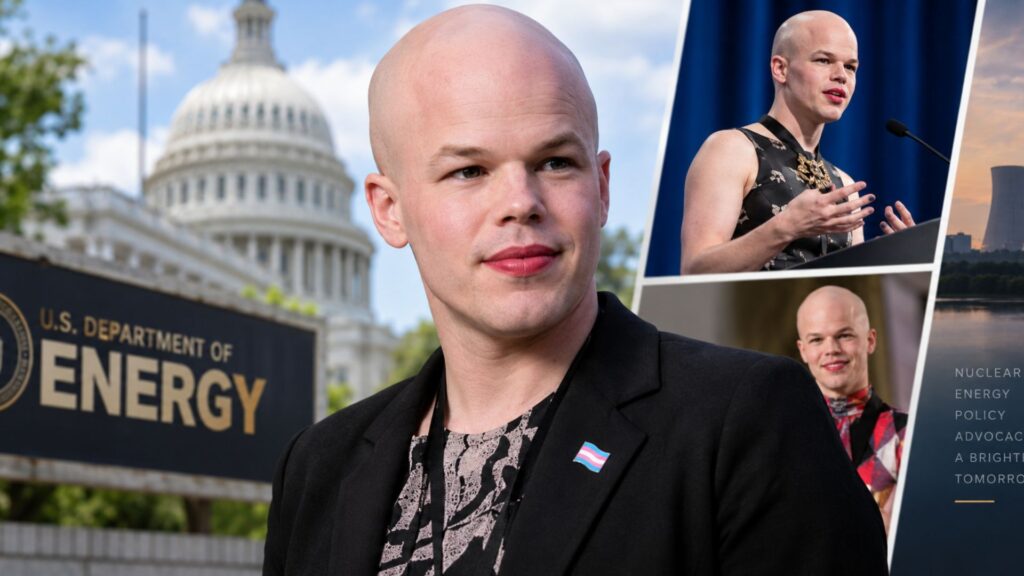

Samuel Brinton, also known as Sam Brinton, is an American nuclear engineer, energy-policy specialist, LGBTQ+ activist, and former U.S. Department of Energy official. Their career attracted attention for combining technical expertise in nuclear waste management with public advocacy on LGBTQ+ issues and science policy. Brinton studied at Kansas State University and the Massachusetts Institute of Technology before working in nuclear policy, advocacy, and government. In 2022, they became Deputy Assistant Secretary for Spent Fuel and Waste Disposition within the Department of Energy’s Office of Nuclear Energy. Their government career, however, ended later that year following luggage-theft allegations that subsequently resulted in legal proceedings.
Quick Bio of Samuel Brinton
| Category | Details |
|---|---|
| Full Name | Samuel Otis Brinton |
| Known As | Sam Brinton |
| Profession | Nuclear Engineer, Energy Policy Specialist, Activist |
| Education | Kansas State University, Massachusetts Institute of Technology |
| Bachelor’s Degree | Nuclear Engineering and Vocal Music |
| Master’s Degree | Nuclear Science and Engineering, Technology and Policy |
| Known For | Nuclear waste policy and LGBTQ+ advocacy |
| Former Federal Role | Deputy Assistant Secretary for Spent Fuel and Waste Disposition |
| Federal Department | U.S. Department of Energy |
| Pronouns | They/Them |
| Major Policy Interest | Spent nuclear fuel and radioactive-waste management |
Early Life and Education
Samuel Brinton developed an interest in science, engineering, and public policy at an early age. They graduated from Perry High School in Iowa in 2006 before attending Kansas State University. Their education at K-State was unusual in that it combined technical engineering studies with vocal music.
According to Kansas State University’s biography, Brinton earned a Bachelor of Science in nuclear engineering and vocal music in May 2011. Their university research focused on nuclear reprocessing and the future management of spent nuclear fuel. The research examined the amount of nuclear reprocessing capacity that could potentially be required as nuclear power expanded globally.
Brinton later continued their education at the Massachusetts Institute of Technology. In 2013, they completed a master’s degree in nuclear science and engineering through MIT’s technology and policy program. Their academic interests brought together engineering, energy policy, and the political challenges associated with nuclear waste.
Interest in Nuclear Waste Management
Nuclear waste became one of the defining subjects of Brinton’s professional career. Spent nuclear fuel presents a long-term challenge because it remains radioactive and requires carefully designed systems for storage, transportation, and eventual disposal.
During their academic career, Brinton investigated the relationship between nuclear power generation and future reprocessing requirements. Their work considered how the growth of nuclear reactors could affect the need for facilities capable of processing spent fuel.
This specialization eventually helped establish Brinton as a nuclear-policy professional rather than simply an engineer. They became interested in the intersection between scientific research and government decision-making, particularly the policies required to manage nuclear materials safely.
Career in Science and Energy Policy
After completing their education, Brinton worked in several positions connected to energy policy, nuclear technology, and science advocacy. Their professional experience included work with organizations such as the Bipartisan Policy Center and nuclear-waste company Deep Isolation.
At Deep Isolation, Brinton worked in government and political affairs. The company focuses on potential solutions for the long-term disposal of nuclear waste. Their work there gave them additional experience in dealing with policymakers and communicating technical nuclear issues in a political environment.
Brinton also developed an interest in science advocacy while studying at MIT. They became involved with Stand with Science, an organization advocating for federal support for scientific research. Their activities demonstrated an interest in influencing public policy beyond the narrow boundaries of engineering.
LGBTQ+ Advocacy and Public Activism
Alongside their scientific career, Brinton became known for LGBTQ+ advocacy. While attending Kansas State University, they participated in efforts supporting LGBTQ+ students and helped organize the university’s first Pride march. They were also involved in efforts that contributed to the establishment of an LGBTQ+ resource center in Kansas.
Brinton later held advocacy roles connected with LGBTQ+ youth. Their work included a position with The Trevor Project, an organization focused on crisis intervention and suicide prevention for LGBTQ+ young people.
They also spoke publicly about their reported experiences with conversion therapy and became an advocate against the practice. Brinton’s account received significant attention, although some activists and commentators have questioned aspects of their recollections. Because these claims have been disputed, they are best understood as Brinton’s reported experiences rather than presenting every detail as independently verified fact.
Their activism nevertheless became an important part of their public identity and helped establish them as a prominent LGBTQ+ advocate before entering federal government.
Appointment to the U.S. Department of Energy
In 2022, Brinton was appointed Deputy Assistant Secretary for Spent Fuel and Waste Disposition in the U.S. Department of Energy’s Office of Nuclear Energy. The position placed them in charge of a policy area directly connected to their academic and professional specialization.
Brinton’s appointment attracted considerable attention because of their technical background, advocacy career, and gender identity. Their responsibilities involved issues surrounding spent nuclear fuel and radioactive-waste disposition, an area requiring cooperation among scientists, regulators, policymakers, communities, and industry.
The appointment represented a significant point in Brinton’s career because it brought their nuclear-policy expertise into the federal government.
Luggage Theft Cases and End of Federal Career
Brinton’s time at the Department of Energy was brief. In late 2022, they faced allegations concerning the theft of luggage at airports. The controversy resulted in Brinton being placed on leave and subsequently leaving the Department of Energy.
One case involved luggage taken from the baggage area at Minneapolis–Saint Paul International Airport in September 2022. Prosecutors later placed that case into an adult diversion program. The requirements included a mental-health evaluation, following recommendations from that evaluation, community service, an apology letter, and returning stolen property. Completion of the requirements could lead to dismissal of the case.
A separate case concerned luggage taken from Harry Reid International Airport in Las Vegas in July 2022. In April 2023, Brinton pleaded no contest to a reduced misdemeanor theft charge. The court ordered restitution of $3,670.74 and imposed a 180-day suspended jail sentence, meaning the jail term did not require incarceration under the terms of the sentence.
A third controversy emerged involving clothing that a designer said had been inside luggage that disappeared years earlier. Brinton was subsequently arrested in Virginia in connection with that investigation. Reporting in 2024 indicated that Brinton pleaded guilty to misdemeanor petit larceny in Virginia as part of a plea agreement and did not receive jail time.
These legal matters significantly changed public perceptions of Brinton. A career that had previously centered on nuclear engineering, science policy, and LGBTQ+ advocacy became strongly associated with the airport luggage cases.
Samuel Brinton’s Professional Legacy
Samuel Brinton’s career remains unusual because it brought together several areas that do not commonly overlap. Their academic background combined nuclear engineering and vocal music, while their professional life moved between technical nuclear policy, science advocacy, LGBTQ+ activism, and federal government.
Their work on nuclear waste management demonstrates a specialized understanding of one of the most difficult issues associated with nuclear energy. Their advocacy career also shows how scientists and engineers can become involved in broader political and social issues.
At the same time, the legal controversies surrounding Brinton became a major part of their public biography. Any balanced account of their life therefore needs to acknowledge both their professional accomplishments and the subsequent legal proceedings without exaggerating allegations or overlooking documented court outcomes.
Final Thoughts
Samuel Brinton’s story is one of a technically trained professional whose career crossed engineering, public policy, activism, and federal service before being dramatically disrupted by legal controversy. From studying nuclear engineering at Kansas State University and MIT to working on nuclear-waste policy and LGBTQ+ advocacy, Brinton developed a distinctive professional profile. Their brief federal appointment placed them at the center of national nuclear-waste policy, but the luggage cases soon overshadowed that work. For readers interested in biographies that explore remarkable careers, public controversies, and the people behind major professional roles, The Pure Magazine – Stories Beyond the Ordinary provides a place to discover more stories and profiles.
FAQs About Samuel Brinton
Who is Samuel Brinton?
Samuel Brinton, commonly known as Sam Brinton, is an American nuclear engineer, energy-policy specialist, LGBTQ+ activist, and former U.S. Department of Energy official.
What did Samuel Brinton study?
Brinton studied nuclear engineering and vocal music at Kansas State University and later earned a master’s degree in nuclear science and engineering through MIT’s technology and policy program.
What position did Samuel Brinton hold at the Department of Energy?
In 2022, Brinton served as Deputy Assistant Secretary for Spent Fuel and Waste Disposition in the Department of Energy’s Office of Nuclear Energy.
What is Samuel Brinton known for?
Brinton is known for their work in nuclear-waste policy, LGBTQ+ advocacy, science-policy activism, and their short tenure as a senior Department of Energy official.
Why did Samuel Brinton leave the Department of Energy?
Brinton’s federal career ended after they became involved in luggage-theft cases. The Department of Energy confirmed in December 2022 that Brinton was no longer a DOE employee.
What happened in the Las Vegas luggage case?
Brinton pleaded no contest to a reduced misdemeanor theft charge in April 2023. They were ordered to pay $3,670.74 in restitution and received a suspended 180-day jail sentence.
Is Samuel Brinton still a government official?
No. Brinton’s position at the U.S. Department of Energy ended in 2022.
You May Also Readr https://thepuremagazine.co.uk/