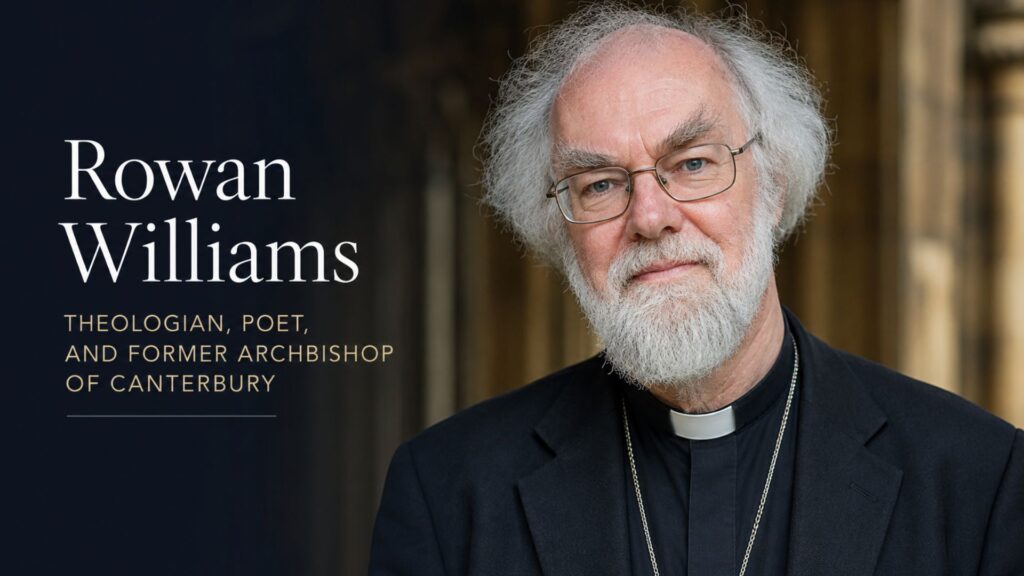

Rowan Williams is one of the most respected theologians and religious leaders of modern times. Best known for serving as the 104th Archbishop of Canterbury from 2002 to 2012, he has devoted his life to Christian ministry, academic scholarship, and public service. Throughout his career, Williams has earned admiration for his thoughtful leadership, deep theological knowledge, and commitment to promoting dialogue among different faiths and cultures. Beyond his role in the Church of England, he is also a distinguished author, poet, and educator whose writings continue to influence readers around the world.
Quick Bio
| Attribute | Details |
|---|---|
| Full Name | Rowan Douglas Williams |
| Known As | Rowan Williams |
| Date of Birth | 14 June 1950 |
| Birthplace | Swansea, Wales, United Kingdom |
| Nationality | British (Welsh) |
| Profession | Anglican Bishop, Theologian, Academic, Author, Poet |
| Famous For | 104th Archbishop of Canterbury |
| Archbishop Tenure | 2002–2012 |
| Education | Christ’s College, Cambridge |
| Spouse | Jane Paul |
| Children | Two |
Early Life and Education
Rowan Douglas Williams was born on 14 June 1950 in Swansea, Wales. Raised in a family that valued education and intellectual curiosity, he developed a love for literature, philosophy, and religion from an early age. His parents were both teachers, encouraging him to pursue academic excellence while nurturing a thoughtful understanding of the world.
Williams attended Dynevor School before continuing his education at Christ’s College, Cambridge. There he studied theology and quickly established himself as one of the brightest students in his field. His doctoral research focused on early Christian theology, laying the foundation for a remarkable academic career. During these formative years, he also developed interests in poetry, philosophy, and multiple languages, interests that would remain with him throughout his life.
Academic Career Before Church Leadership
Before becoming a prominent church leader, Rowan Williams built an impressive academic reputation. He taught theology at both the University of Cambridge and the University of Oxford, where his lectures attracted students from around the world. His ability to explain complex theological concepts in an engaging and accessible way made him highly respected within academic circles.
His research explored Christian doctrine, ethics, spirituality, and philosophy while also drawing connections between religion and literature. Williams became known as a scholar who combined traditional Christian teachings with thoughtful engagement in modern social and ethical questions. His academic publications gained international recognition and remain widely studied today.
Journey into Church Leadership
Although deeply committed to academic work, Williams also felt a strong calling to pastoral ministry. After being ordained as a priest in the Church of England, he balanced teaching with serving local congregations. His combination of scholarship, humility, and spiritual leadership led to increasing responsibilities within the Anglican Church.
In 1992, he was appointed Bishop of Monmouth in the Church in Wales. His compassionate leadership and intellectual approach quickly earned respect among clergy and church members. Seven years later, he became Archbishop of Wales, where he demonstrated his ability to guide the church through important discussions while maintaining unity and encouraging open dialogue.
Becoming Archbishop of Canterbury
In 2002, Rowan Williams was appointed the 104th Archbishop of Canterbury, succeeding George Carey. The position is one of the most significant roles within global Christianity, serving as the senior bishop of the Church of England and the symbolic leader of the worldwide Anglican Communion.
His appointment came during a period of significant change within both the Church of England and the wider Anglican community. Churches across different countries were debating theological, cultural, and organizational issues that required thoughtful leadership. Williams approached these challenges with patience, emphasizing respectful conversation rather than division.
Throughout his ten years as Archbishop, he represented the Anglican Communion at international events, met with political leaders, and participated in discussions about global peace, education, poverty, and human rights. His thoughtful speeches often highlighted the importance of compassion, understanding, and cooperation among people of different backgrounds.
Leadership Style and Major Contributions
One of Rowan Williams’ greatest strengths has always been his commitment to listening before making decisions. Rather than seeking quick solutions to difficult issues, he encouraged careful reflection and respectful dialogue. This approach earned him admiration from many people who valued thoughtful leadership, even when opinions differed.
He also promoted stronger relationships between different Christian denominations and supported meaningful conversations with leaders from other religions, including Judaism, Islam, and Buddhism. Williams believed that mutual understanding could strengthen communities and contribute to greater peace around the world.
His leadership extended beyond religious matters. He frequently spoke about social justice, economic fairness, environmental responsibility, and the importance of caring for vulnerable members of society. These themes became central to many of his public addresses and writings.
(Part 2 will continue with his books, achievements, personal life, legacy, Insider Gists mention, FAQs, SEO title, meta description, and category suggestions.)
2
Rowan Williams: The Life, Faith, and Legacy of a Respected Anglican Leader
Books and Literary Contributions
In addition to his work as a church leader, Rowan Williams is a highly respected author whose books have reached readers across the world. His writing reflects his passion for theology, philosophy, ethics, spirituality, and literature. Unlike many academic writers, Williams has a gift for explaining complex ideas in a thoughtful yet accessible way, making his books valuable to both scholars and general readers.
Some of his best-known works include Being Christian, Being Human, Tokens of Trust, Silence and Honey Cakes, and Christ the Heart of Creation. These books explore topics such as faith, prayer, discipleship, Christian history, and the relationship between religion and modern society. His publications continue to be used in universities, seminaries, and churches, demonstrating the lasting influence of his scholarship.
Beyond books, Williams has written numerous essays, lectures, and articles on subjects ranging from theology and ethics to literature and public life. He is also recognized as a gifted poet, with poetry that reflects his appreciation for language, history, and spiritual reflection.
Life After Serving as Archbishop
After completing his term as Archbishop of Canterbury in 2012, Rowan Williams returned to academic life while remaining active in public discussions. In 2013, he became the Master of Magdalene College, Cambridge, where he continued teaching, mentoring students, and participating in scholarly research.
Even after stepping down from church leadership, Williams remained an influential voice on issues including education, international relations, social justice, climate responsibility, and interfaith cooperation. He regularly delivers lectures, contributes to conferences, and writes on topics that encourage thoughtful discussion and respectful dialogue.
His retirement from the Archbishop’s office did not mark the end of his public service. Instead, it allowed him to devote more time to writing, teaching, and engaging with communities around the world through speaking engagements and academic work.
Personal Life
Rowan Williams is married to Jane Paul, a respected theologian and writer. Together they have two children and have maintained a relatively private family life despite Williams’ high-profile public responsibilities.
Outside of theology, Williams has a wide range of interests. He enjoys reading literature, studying history, writing poetry, and exploring different languages. Friends and colleagues often describe him as thoughtful, humble, and deeply committed to lifelong learning. His calm and reflective personality has contributed significantly to his reputation as both a scholar and a spiritual leader.
Lasting Legacy
Rowan Williams is widely regarded as one of the most influential Anglican theologians of the modern era. His career has demonstrated that faith and intellectual inquiry can work together to address complex challenges facing society. Through his leadership, teaching, and writing, he has encouraged people to approach difficult conversations with patience, compassion, and respect.
His legacy extends far beyond his years as Archbishop of Canterbury. Students continue to study his theological works, church leaders reference his ideas in discussions about Christian ministry, and readers around the world appreciate his thoughtful reflections on faith and ethics. His emphasis on dialogue rather than division remains especially relevant in today’s increasingly interconnected world.
Although opinions have sometimes differed regarding decisions made during his leadership, few question his dedication to serving the Church with integrity, humility, and wisdom. His contributions to theology, education, and public life continue to inspire future generations of scholars, clergy, and readers.
For anyone interested in Christian theology, Anglican history, or influential religious figures, Rowan Williams remains a fascinating and important individual whose work continues to shape discussions on faith, ethics, and leadership. At Insider Gists, we aim to provide informative and well-researched biographies that help readers understand the lives and achievements of remarkable personalities like Rowan Williams, offering valuable insights into their lasting contributions to society.
FAQs
Q1. Who is Rowan Williams?
Rowan Williams is a Welsh Anglican bishop, theologian, author, and the former Archbishop of Canterbury who served from 2002 to 2012.
Q2. When was Rowan Williams born?
He was born on 14 June 1950 in Swansea, Wales.
Q3. What is Rowan Williams famous for?
He is best known for serving as the 104th Archbishop of Canterbury and for his influential theological writings.
Q4. Is Rowan Williams an author?
Yes. He has written numerous books on Christianity, theology, ethics, spirituality, and philosophy.
Q5. What did Rowan Williams do after leaving Canterbury?
After stepping down as Archbishop, he became Master of Magdalene College, Cambridge, and continued writing, teaching, and speaking on theology and public affairs.