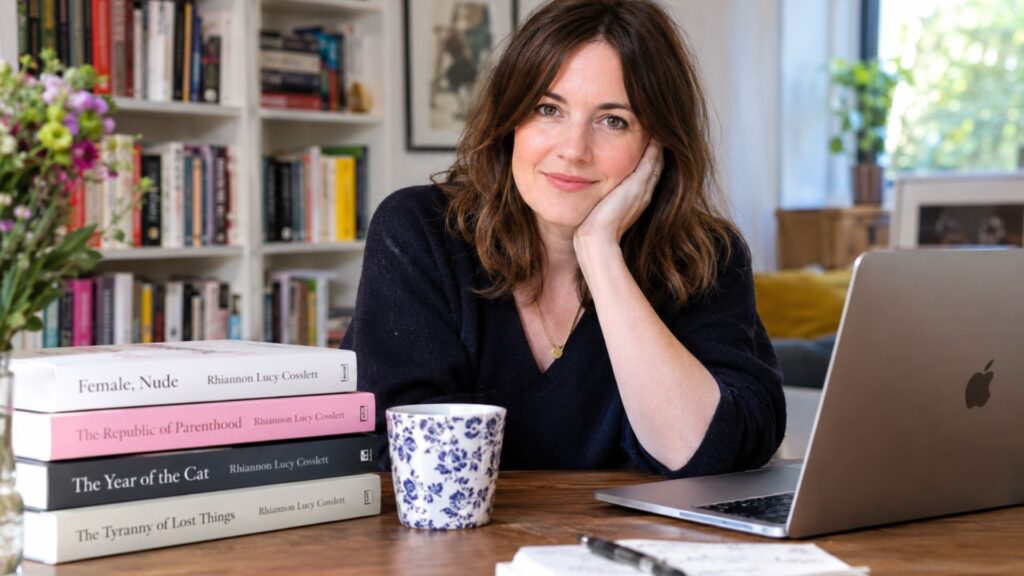

Rhiannon Lucy Cosslett is a British journalist, author and columnist whose work has explored feminism, culture, relationships, motherhood, family life and the experiences of women in contemporary society. Best known for her long association with The Guardian, Cosslett has developed a distinctive voice that often combines personal experience with broader observations about society and culture. Alongside journalism, she has built a career as a novelist and nonfiction writer, publishing books including The Tyranny of Lost Things, The Year of the Cat, The Republic of Parenthood and Female, Nude.
Quick Bio
| Detail | Information |
|---|---|
| Full Name | Rhiannon Lucy Cosslett |
| Profession | Journalist, Author and Columnist |
| Nationality | British |
| Raised | Wales |
| Known For | Journalism, books, cultural commentary and feminist writing |
| Major Publication | The Guardian |
| Notable Project | The Vagenda |
| First Novel | The Tyranny of Lost Things |
| Memoir | The Year of the Cat |
| Other Notable Book | The Republic of Parenthood |
| 2026 Novel | Female, Nude |
| Current Base | North London |
Early Life and Welsh Background
Rhiannon Lucy Cosslett was born in London but was raised in Wales, an experience that has remained an important part of her identity as a writer. Her Welsh upbringing has occasionally appeared in her journalism, particularly when she has written about Welsh culture, politics, language and identity.
Growing up in Wales provided Cosslett with a perspective that later became relevant to her writing about belonging and contemporary British life. Her work has demonstrated an interest in the way personal identity can intersect with geography, culture and social expectations.
Her background also includes time spent living in France and Italy before eventually settling in London. These experiences contributed to a broad cultural perspective that can be seen throughout her writing career.
Career in Journalism
Cosslett became known professionally through journalism and commentary, eventually establishing a strong association with The Guardian. Her writing has appeared across subjects including feminism, culture, relationships, parenting, literature, art and social issues.
Earlier in her career, she worked as a commissioning editor and freelance journalist. Her work appeared in several publications, helping her develop a reputation for writing about issues affecting women and modern society.
A significant part of her journalistic style involves connecting everyday experiences with larger cultural questions. Rather than limiting her work to traditional news reporting, she frequently approaches subjects through personal observation, cultural criticism and commentary.
Her Guardian columns have covered a wide variety of topics, from motherhood and friendship to art, social media and contemporary politics and culture.
The Vagenda and Feminist Writing
One of the notable projects associated with Cosslett’s early career was The Vagenda, a feminist blog and media project that she co-founded with Holly Baxter.
The project examined the ways popular media discussed women and presented ideas about gender, beauty, relationships and society. Cosslett and Baxter later turned the project into the book The Vagenda: A Zero Tolerance Guide to the Media.
The work contributed to Cosslett’s growing profile as a feminist writer and commentator. It also established themes that would remain visible throughout her later journalism, particularly her interest in how cultural expectations influence women’s lives.
Becoming an Author
Cosslett’s career has extended beyond journalism into fiction and memoir. Her first novel, The Tyranny of Lost Things, was published in 2018. The book marked an important stage in her development as an author and demonstrated her ability to move from journalistic commentary into longer-form storytelling.
Her nonfiction work has also drawn heavily from personal experiences. The Year of the Cat explores her relationship with her cat and uses that relationship as a way of considering loss, attachment and everyday emotional life.
This ability to transform apparently ordinary experiences into subjects for wider reflection is characteristic of much of Cosslett’s writing.
The Republic of Parenthood
Parenthood became another major subject in Cosslett’s work. Her experiences of becoming a parent influenced a substantial body of journalism and eventually contributed to The Republic of Parenthood.
The book brings together writing about parenting and the realities of raising children. Rather than presenting parenthood as a simple or idealised experience, Cosslett examines the practical, emotional and cultural questions surrounding modern family life.
Her writing about parenthood also reflects one of the recurring characteristics of her work: using personal experiences as an entry point into larger conversations about society.
Female, Nude
In 2026, Cosslett added another novel to her bibliography with Female, Nude. The novel was published by Tinder Press and focuses on Sophie, a painter whose experiences during a holiday in Greece lead her to reconsider relationships, motherhood, art and sexuality.
The book continues Cosslett’s interest in questions surrounding women’s lives and creative expression while giving her an opportunity to explore these themes through fiction.
Its publication also demonstrates the continuing development of her career beyond newspaper columns. She has increasingly combined journalism, memoir and fiction as different forms through which to examine contemporary experiences.
Writing Style and Themes
Cosslett’s writing frequently moves between the personal and the wider social world. A discussion of family life, friendship, art or parenting can become a starting point for considering broader cultural expectations.
Several themes recur across her body of work. Feminism is one of the most visible, particularly in her earlier work with The Vagenda and in subsequent journalism. Motherhood and parenthood have also become increasingly important subjects.
Relationships, friendship, identity, popular culture, literature and art are additional areas that frequently appear in her work. Her journalism often reflects on how people navigate ordinary experiences within rapidly changing social and cultural environments.
This mixture of personal observation and cultural commentary has helped make her work recognisable across different forms of writing.
Work with The Guardian
The Guardian remains one of the most important parts of Cosslett’s professional career. As a columnist and contributor, she has written extensively about contemporary social and cultural subjects.
Her articles demonstrate a broad range of interests. She has discussed women’s experiences, children, parenting, friendship, social media, art, literature and Welsh identity among many other topics.
Her continued publication in the newspaper has allowed her to respond to changing cultural conversations while maintaining the personal and reflective qualities associated with her writing.
Personal Life
Cosslett has generally discussed aspects of her personal life through her published writing, particularly when those experiences relate to subjects such as parenthood and family.
Public publisher biographies have stated that she lives in north London with her husband, son and cat, Mackerel. Her family life has influenced some of her nonfiction writing, although she has maintained a distinction between her public work and unnecessary personal details.
For readers interested in her career, her published work provides the clearest insight into the subjects and experiences that have influenced her development as a writer.
Why Rhiannon Lucy Cosslett Remains Notable
Rhiannon Lucy Cosslett’s career stands out because she has worked successfully across several forms of writing. She began with journalism and feminist commentary, became associated with The Vagenda, established herself as a Guardian columnist and subsequently expanded into novels, memoir and books about parenthood.
Her work demonstrates how contemporary journalism can overlap with literary writing and personal storytelling. Whether she is writing about feminism, motherhood, art, friendship, relationships or cultural identity, she frequently uses individual experiences to explore broader questions about modern life.
As her 2026 novel Female, Nude demonstrates, Cosslett continues to develop her work as a writer while remaining active in journalism. Her career therefore encompasses newspaper columns, cultural commentary, memoir and fiction, making her a notable contemporary British writer.
For readers who enjoy discovering the stories and careers of influential writers, journalists and cultural figures, The Pure Magazine offers more profiles and features that explore people and their work. Stories Beyond the Ordinary, The Pure Magazine continues to bring together engaging biographies and cultural stories for its readers.
FAQs About Rhiannon Lucy Cosslett
Who is Rhiannon Lucy Cosslett?
Rhiannon Lucy Cosslett is a British journalist, author and columnist known particularly for her work with The Guardian and her writing about feminism, culture, parenting, relationships and contemporary society.
What is Rhiannon Lucy Cosslett known for?
She is known for her journalism, feminist commentary, work with The Vagenda, Guardian columns and books including The Tyranny of Lost Things, The Year of the Cat, The Republic of Parenthood and Female, Nude.
What is The Vagenda?
The Vagenda was a feminist blog and media project co-founded by Rhiannon Lucy Cosslett and Holly Baxter. The project examined representations of women in popular media and later became a book.
What books has Rhiannon Lucy Cosslett written?
Her notable books include The Tyranny of Lost Things, The Year of the Cat, The Republic of Parenthood and the 2026 novel Female, Nude. She also co-authored The Vagenda with Holly Baxter.
Is Rhiannon Lucy Cosslett a Guardian columnist?
Yes. Cosslett has a long association with The Guardian and continues to contribute columns and articles covering social, cultural and personal subjects.
Where was Rhiannon Lucy Cosslett raised?
Although born in London, Cosslett was raised in Wales. Her Welsh background has occasionally featured in her journalism.
What is Female, Nude about?
Female, Nude is a novel centred on Sophie, a painter whose experiences during a holiday in Greece prompt reflections on relationships, motherhood, art and sexuality.
You May Also Readr https://thepuremagazine.co.uk/