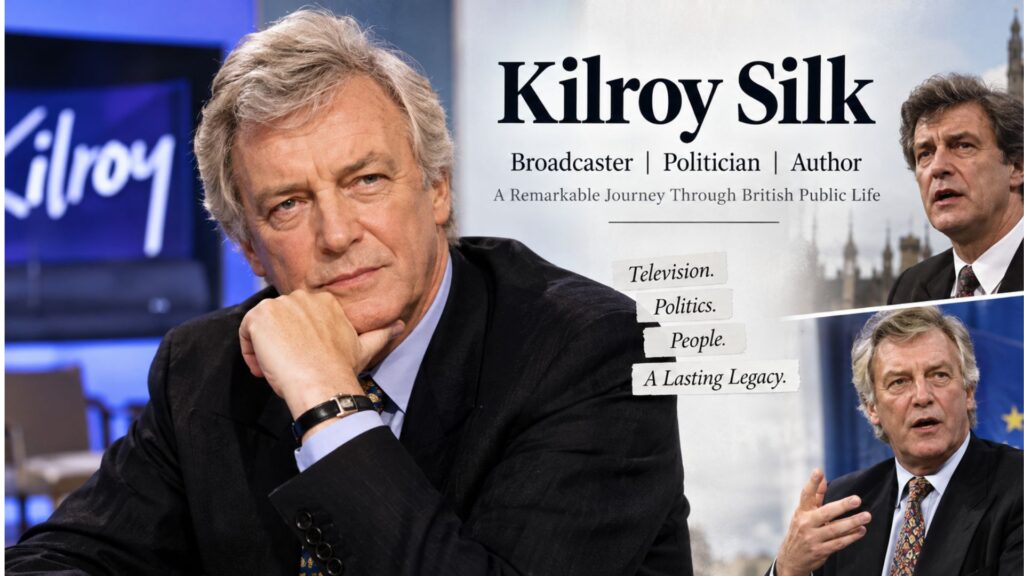

Robert Kilroy-Silk, widely known simply as Kilroy Silk, has had one of the more unusual careers in modern British public life. He moved between academia, Westminster politics, television and European politics, becoming particularly famous as the presenter of the BBC daytime programme Kilroy. His career has also included periods of controversy, political disagreements and a return to frontline politics after years in broadcasting. From his early life in Birmingham to his years as a Labour MP and later his involvement with UKIP and Veritas, Kilroy-Silk has remained a distinctive figure in British media and political history.
Quick Bio of Kilroy Silk
| Category | Details |
|---|---|
| Full Name | Robert Kilroy-Silk |
| Born | 19 May 1942 |
| Birthplace | Birmingham, England |
| Education | Saltley Grammar School; London School of Economics |
| Profession | Broadcaster, journalist, politician, former academic |
| Political Career | Labour MP; UKIP MEP |
| Famous For | Presenting Kilroy |
| Wife | Jan Beech |
| Children | Two publicly acknowledged children |
| Political Party Founded | Veritas |
| Known For | Television, journalism and political commentary |
Early Life and Education
Robert Kilroy-Silk was born in Birmingham in 1942. His childhood was shaped by difficult circumstances. His father, William Silk, served in the Royal Navy and was killed during the Second World War when Robert was very young. His mother later married John Kilroy, who had been a friend of her late husband. Robert eventually adopted the double-barrelled surname Kilroy-Silk.
He attended Saltley Grammar School before progressing to the London School of Economics. His time at the LSE was important in shaping his intellectual and political interests. He graduated in 1964 and subsequently entered academia, becoming a politics lecturer at the University of Liverpool in 1966.
His academic career was closely connected with his political ambitions. Kilroy-Silk had developed an interest in politics from an early age and viewed university teaching partly as a route toward entering public life. Before becoming an MP, he contested Ormskirk for Labour in the 1970 general election but was unsuccessful.
Entering Parliament
Kilroy-Silk eventually won Ormskirk at the February 1974 general election. He remained the Labour MP for the constituency until 1983, when boundary changes led him to represent Knowsley North. According to the official parliamentary record, he served in the House of Commons from 28 February 1974 until 1 October 1986.
During his parliamentary career, Kilroy-Silk was involved with the Home Affairs Committee and held opposition responsibilities relating to home affairs. His early political career was firmly rooted in the Labour movement, and he described himself at the time as a socialist interested in issues including poverty, pensions and education.
His time in Parliament eventually came to an end in 1986. Contemporary accounts connect his departure with internal Labour Party disputes and difficulties surrounding the political direction of his constituency. After leaving Westminster, he turned increasingly toward broadcasting and journalism.
Becoming a Television Star
Television transformed Kilroy-Silk’s public profile. He became associated with the BBC daytime programme Kilroy, a talk show that discussed personal relationships, family problems and controversial social issues.
The format relied heavily on direct conversations between Kilroy-Silk, guests and members of the studio audience. His distinctive presentation style made him one of the most recognizable figures on British daytime television. The programme addressed subjects ranging from family conflict and relationships to addiction, parenting and social tensions.
For many viewers, the television presenter became far more familiar than the former politician. His ability to question guests directly and encourage emotional discussions helped establish the programme as a significant part of daytime television.
His broadcasting career also extended beyond Kilroy. He worked as a journalist and newspaper columnist and became a recognizable media personality whose opinions frequently generated discussion.
The Controversy That Ended Kilroy
Kilroy-Silk’s television career experienced a major setback in 2004 after controversy surrounding a newspaper column in which he made highly critical comments about Arabs. The remarks generated strong criticism, and he subsequently expressed regret for the offence caused. The BBC ultimately ended his programme following the controversy.
The episode marked an important turning point. After spending many years as a television presenter, Kilroy-Silk returned to political activity. His public profile from television provided him with a platform that was unusual for a former MP returning to electoral politics.
A New Political Chapter With UKIP
Kilroy-Silk joined the UK Independence Party and was elected as a Member of the European Parliament in the 2004 European elections. His move from Labour politics to UKIP represented a substantial change in his political career.
His time with UKIP, however, was short-lived. Disagreements with the party leadership intensified, and he left UKIP in January 2005. Contemporary reporting describes the departure as part of a significant dispute over the party’s direction and leadership.
Founding Veritas
After leaving UKIP, Kilroy-Silk established a new political party called Veritas in 2005. The name came from the Latin word for “truth,” reflecting the party’s stated political message.
Veritas attracted considerable media attention partly because of Kilroy-Silk’s celebrity profile and his previous career on television. However, the party’s electoral performance was limited. Following the 2005 general election, Kilroy-Silk resigned as leader of Veritas.
Although Veritas did not become a major force in British politics, its creation became another notable chapter in Kilroy-Silk’s unusually varied public career.
Personal Life
Kilroy-Silk married Jan Beech in 1963. They met during his school years, and their marriage has been a long-standing part of his biography. Contemporary profiles have also documented his two publicly acknowledged children and aspects of his family life.
His private life has sometimes received substantial media attention, particularly during the height of his television fame. However, his professional achievements remain the main reason for his lasting place in British public life.
Kilroy Silk’s Lasting Legacy
Kilroy-Silk’s career is difficult to place within a single profession. He was an academic before becoming a Labour politician, a politician before becoming a household television presenter, and a television personality before returning to politics through UKIP and Veritas.
His parliamentary career lasted more than a decade, while Kilroy made his name familiar to a much wider television audience. His later political activities demonstrated how his media profile continued to influence his public career. The official parliamentary record confirms his service as an MP for Ormskirk and Knowsley North between 1974 and 1986.
What makes Kilroy-Silk particularly interesting is the range of institutions and professions through which he moved. Few British public figures have combined university teaching, Westminster politics, daytime television, newspaper journalism and European politics in quite the same way.
For readers interested in British broadcasting and political history, his story provides an unusual look at how public figures can move between different forms of influence. From Birmingham schoolboy and university lecturer to Labour MP, famous BBC presenter and later political party founder, Kilroy Silk remains a distinctive name in Britain’s modern media and political landscape. At The Pure Magazine, stories like this explore the careers, backgrounds and journeys of notable public figures, bringing together the details that help readers understand the people behind the headlines.
FAQs About Kilroy Silk
Who is Kilroy Silk?
Kilroy Silk is the commonly used name for Robert Kilroy-Silk, an English broadcaster, journalist and former politician best known for presenting the BBC daytime programme Kilroy.
When was Kilroy Silk born?
Robert Kilroy-Silk was born on 19 May 1942 in Birmingham, England.
What was Kilroy Silk famous for?
He became particularly famous as the presenter of the BBC daytime talk show Kilroy, which discussed personal and social issues with guests and members of the public.
Was Kilroy Silk a politician?
Yes. He was a Labour MP for Ormskirk and later Knowsley North from 1974 to 1986. He later became a UKIP Member of the European Parliament.
Did Kilroy Silk create a political party?
Yes. After leaving UKIP in 2005, he founded Veritas, a political party that he led for a short period.
What happened to the TV programme Kilroy?
The programme ended following controversy surrounding comments Kilroy-Silk made in a newspaper column about Arabs. The BBC subsequently ended the show.
Where did Kilroy Silk study?
He attended Saltley Grammar School in Birmingham and later studied at the London School of Economics.
Who is Kilroy Silk’s wife?
He married Jan Beech in 1963.