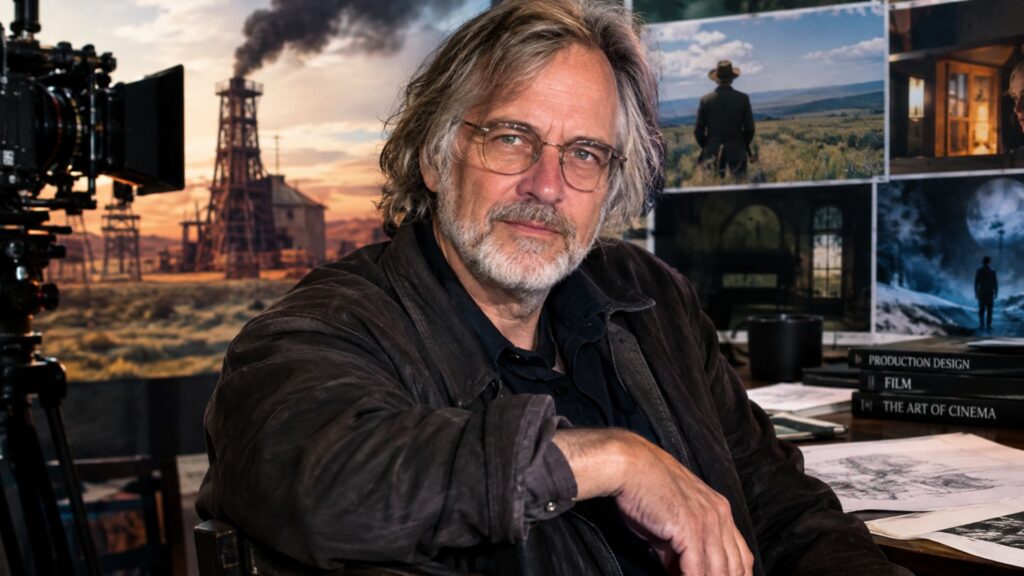

Jack Fisk is one of the most respected production designers and filmmakers in American cinema, known for creating realistic, atmospheric, and visually unforgettable worlds for the big screen. Born on December 19, 1945, in Canton, Illinois, Fisk developed an artistic sensibility that eventually led him from painting and sculpture into filmmaking. Over a career spanning more than five decades, he has worked with some of the most distinctive directors in Hollywood, including Terrence Malick, David Lynch, Paul Thomas Anderson, and Alejandro González Iñárritu. His work has helped shape films such as Badlands, Days of Heaven, The Thin Red Line, Mulholland Drive, There Will Be Blood, The Tree of Life, The Revenant, and Killers of the Flower Moon.
Quick Bio of Jack Fisk
| Detail | Information |
|---|---|
| Full Name | Jack Fisk |
| Date of Birth | December 19, 1945 |
| Birthplace | Canton, Illinois, USA |
| Profession | Production Designer, Art Director, Film Director |
| Active Years | 1971–present |
| Spouse | Sissy Spacek |
| Children | Madison Fisk and Schuyler Fisk |
| Known For | Production design and film direction |
| Major Collaborators | Terrence Malick, David Lynch, Paul Thomas Anderson, Alejandro González Iñárritu |
| Oscar Nominations | There Will Be Blood, The Revenant, Killers of the Flower Moon, Marty Supreme |
Early Life and Artistic Beginnings
Jack Fisk’s career was shaped by his interest in visual art long before he became an established name in Hollywood. He began his artistic pursuits as a painter, developing an appreciation for composition, texture, space, and the way ordinary surroundings can communicate emotion. His friendship with David Lynch, which began during their youth, became an important part of his creative journey and eventually connected Fisk to the world of experimental filmmaking.
Fisk entered the film industry during the early 1970s, initially working in art direction and related production roles. His early credits included films such as The Peace Killers, Cool Breeze, Terminal Island, and The Slams. He gradually established himself as a designer capable of giving movies a strong sense of place without making the environments feel artificial.
Jack Fisk and Terrence Malick
One of the defining professional relationships of Jack Fisk’s career has been his long collaboration with filmmaker Terrence Malick. Their first major collaboration was Badlands, followed by Days of Heaven and later The Thin Red Line, The New World, The Tree of Life, To the Wonder, and other projects.
Fisk’s design philosophy suited Malick’s filmmaking style because both filmmakers were interested in atmosphere, natural environments, visual storytelling, and emotional authenticity. Rather than simply constructing impressive sets, Fisk often searched for locations and physical details that could make a film’s world feel as though it existed before the cameras arrived.
In a Criterion Collection interview, Fisk explained that his approach changes from film to film and director to director, with the story guiding his decisions. He described research and locations as important sources of clues when developing a film’s visual environment.
Creating the World of There Will Be Blood
Another major chapter in Fisk’s career came with Paul Thomas Anderson’s There Will Be Blood in 2007. The film required the creation of a convincing early twentieth-century oil town, and Fisk approached the project through research, locations, and hands-on construction.
Fisk recalled discovering a building near railroad tracks in Texas that helped him visualize the fictional town of Little Boston. The observation became an important inspiration for the film’s environment. His work helped create the harsh, dusty, industrial atmosphere that became central to the movie’s identity.
The production design earned Fisk his first Academy Award nomination for Best Production Design. The recognition demonstrated how his detailed environments could become an essential storytelling element rather than merely a background for the actors.
Working With David Lynch
Jack Fisk’s relationship with David Lynch is another fascinating part of his career. The two knew each other from their younger years, and their creative connection continued into professional filmmaking.
Fisk worked on Lynch-related projects including Eraserhead, The Straight Story, and Mulholland Drive. His involvement with Eraserhead was particularly unusual because he also appeared in the film as the mysterious Man in the Planet. The role became one of the more memorable examples of his occasional presence in front of the camera.
With Lynch, Fisk had to respond to a filmmaker whose imagination could be highly specific and unconventional. Fisk has described Lynch as an artist-designer who carries an entire visual world in his head. That kind of collaboration required sensitivity to unusual ideas while still turning them into practical physical environments.
His Approach to Production Design
What makes Jack Fisk particularly respected among filmmakers is his hands-on approach. He does not view production design simply as drawing plans or selecting decorative objects. He prefers to understand the physical environment, work directly with locations, and remain involved throughout the filmmaking process.
Fisk has emphasized the importance of creating spaces that work for the camera and the actors. He has also described production design as a collaborative relationship with cinematographers because the visual environment and cinematography depend on one another.
His artistic influences include painters such as Edward Hopper. Fisk has admired Hopper’s ability to tell stories through a small number of carefully chosen objects and visual details. That influence can be seen in Fisk’s preference for environments that feel authentic without being overloaded with unnecessary decoration.
Major Films and Oscar Recognition
Throughout his career, Fisk has contributed to an impressive collection of critically acclaimed films. His credits include Phantom of the Paradise, Carrie, Days of Heaven, The Thin Red Line, The Straight Story, Mulholland Drive, The New World, There Will Be Blood, The Tree of Life, The Master, The Revenant, and Killers of the Flower Moon.
His production design work has earned Academy Award nominations for There Will Be Blood, The Revenant, Killers of the Flower Moon, and Marty Supreme. These nominations reflect the lasting importance of his visual contribution to modern filmmaking.
Jack Fisk and Sissy Spacek
Jack Fisk’s personal life is also closely connected to the film industry. He married acclaimed actress Sissy Spacek in 1974, and the couple have two daughters, Madison Fisk and Schuyler Fisk. Schuyler later pursued a career as an actress and singer.
Fisk’s connection with the Spacek family also became part of his broader filmmaking circle. His professional and personal relationships demonstrate how deeply connected his life has been to American cinema while he himself has generally maintained a quieter public profile than many actors and directors.
Directing Career
Although Fisk is best known for production design, he has also worked as a director. His directing credits include Raggedy Man in 1981, Violets Are Blue in 1986, Daddy’s Dyin’…Who’s Got the Will? in 1990, and Final Verdict in 1991.
His directing experience provides another perspective on his career because it demonstrates that his understanding of filmmaking extends beyond the art department. Fisk has worked with stories, actors, locations, cinematographers, and directors from multiple perspectives.
Later Career and Lasting Influence
Even after decades in the industry, Jack Fisk has continued to contribute to major productions. His later credits include films such as The Revenant and Killers of the Flower Moon, demonstrating that his visual approach has remained relevant across different eras and filmmaking styles. His work on The New World also illustrates his ability to create historical environments with a strong sense of physical authenticity.
Jack Fisk’s legacy is ultimately about much more than individual movie sets. He has helped establish the idea that production design should serve the emotional and narrative needs of a film. His environments often feel lived-in rather than manufactured, allowing audiences to become immersed in the worlds of the stories. From the American landscapes of Terrence Malick’s films to the psychologically charged environments of David Lynch and Paul Thomas Anderson, Fisk has repeatedly demonstrated how physical spaces can become characters in their own right.
For readers who enjoy discovering the people behind memorable films, Jack Fisk’s career offers an inspiring example of how artistic observation, collaboration, patience, and craftsmanship can shape cinematic history. His decades of work continue to demonstrate why production design is such an important part of filmmaking, and his remarkable career is one of the many stories worth exploring at The Pure Magazine – Stories Beyond the Ordinary.
FAQs About Jack Fisk
Who is Jack Fisk?
Jack Fisk is an American production designer, art director, and film director known for his work on acclaimed movies by filmmakers including Terrence Malick, David Lynch, Paul Thomas Anderson, and Alejandro González Iñárritu.
When was Jack Fisk born?
Jack Fisk was born on December 19, 1945, in Canton, Illinois.
Who is Jack Fisk married to?
Jack Fisk has been married to actress Sissy Spacek since 1974. They have two children.
What movies is Jack Fisk known for?
Some of his best-known production-design credits include Badlands, Days of Heaven, The Thin Red Line, Mulholland Drive, There Will Be Blood, The Tree of Life, The Revenant, and Killers of the Flower Moon.
How many Oscar nominations has Jack Fisk received?
Fisk has received Academy Award nominations for production design for There Will Be Blood, The Revenant, Killers of the Flower Moon, and Marty Supreme.
Did Jack Fisk direct movies?
Yes. His directing credits include Raggedy Man, Violets Are Blue, Daddy’s Dyin’…Who’s Got the Will?, and Final Verdict.
You May Also Readr https://thepuremagazine.co.uk/