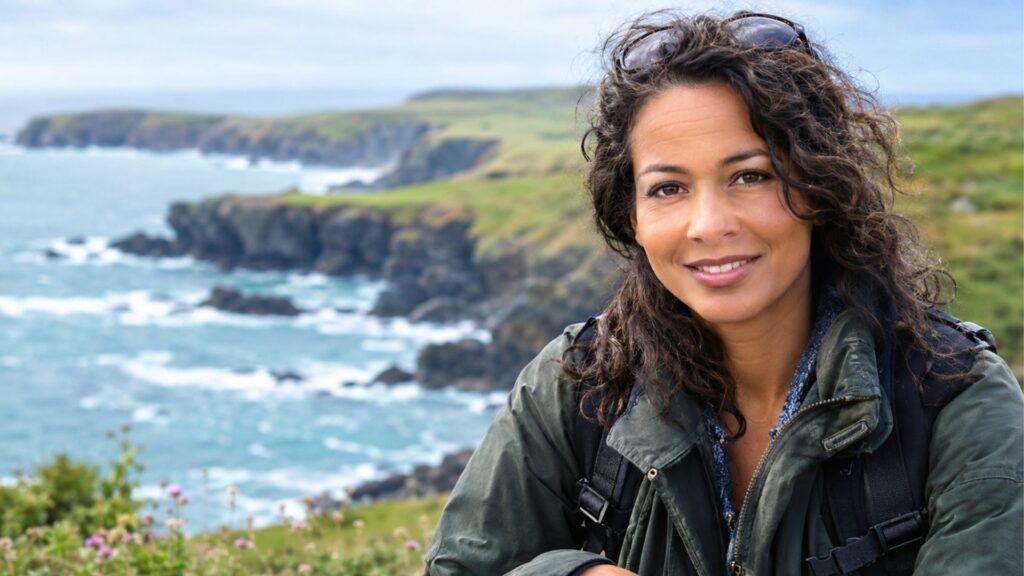

Gillian Burke is a British biologist, natural-history presenter, producer, voice-over artist and wildlife communicator who has become widely recognized through her work on BBC nature programmes. Best known for her involvement with Springwatch, Autumnwatch and Winterwatch, Burke has built a career that combines scientific knowledge with television storytelling. Her journey from growing up in Kenya and Austria to working in natural-history filmmaking and becoming a familiar television presenter is an especially interesting part of her story.
Quick Bio of Gillian Burke
| Category | Details |
|---|---|
| Full Name | Gillian Burke |
| Profession | Biologist, Presenter, Producer, Voice-over Artist |
| Known For | Springwatch, Autumnwatch, Winterwatch |
| Birthplace | Kenya |
| Childhood | Nairobi, Kenya and Vienna, Austria |
| Education | Biology, University of Bristol |
| Main Field | Natural History and Wildlife |
| Television Work | BBC, Discovery Channel, Animal Planet |
| Based In | Cornwall |
| Children | Two |
| Special Interest | Wildlife, conservation, nature and science communication |
Early Life and Family Background
Gillian Burke was born in Kenya and spent the first ten years of her life growing up on the outskirts of Nairobi. Her childhood was strongly connected with the outdoors, and she has spoken about an adventurous upbringing in which she and her brother spent considerable time outside. Her father was a mechanic, while her mother worked with the United Nations. These early experiences gave Burke an unusual connection with both nature and different cultures.
When Burke was ten years old, her family moved from Kenya to Vienna because of her mother’s work with the United Nations. She spent her teenage years in Austria and learned German while living there. The change from Kenya to Vienna exposed her to a very different environment, but her interest in the natural world continued to develop.
Her family background is also particularly diverse. Burke has described having family connections across several countries and continents, including Seychelles, Mauritius, Somalia and Trinidad. She has said that her family history reflects generations of people moving between continents. This international upbringing became an important part of her personal identity and worldview.
Education and Interest in Biology
Burke eventually attended the University of Bristol, where she studied biology. Her academic training provided the scientific foundation for the career that followed. Rather than moving immediately into television presenting, she developed her experience within natural-history filmmaking, beginning behind the scenes.
Her interest in wildlife was closely connected to her experiences growing up in Kenya. She has also described her early fascination with the water and marine life. During her youth, she became interested in scuba diving and eventually trained as a diver, later accumulating substantial diving experience.
This mixture of biology, outdoor experience and interest in marine environments helped give Burke a broad understanding of the natural world.
Gillian Burke’s Television Career
Before becoming a recognizable television presenter, Burke worked in natural-history production. According to her professional biography, she progressed from researcher to producer and director, working on productions connected with Animal Planet and the Discovery Channel. Her scientific background and language skills helped her secure early opportunities in natural-history filmmaking.
Burke has explained that her first television-related opportunities came through work experience. One early production was Living Europe, where her knowledge of languages and entomology proved useful. Her background in biology therefore played a practical role in helping her enter the television industry.
Working behind the camera gave Burke valuable experience in researching stories, understanding wildlife and producing factual television. These skills later became useful when she transitioned into presenting.
Gillian Burke and Springwatch
Gillian Burke is particularly associated with the BBC’s Springwatch brand. She appeared in the wider Watch family of programmes before becoming a regular member of the presenting team. Discover Wildlife identifies her as joining the Springwatch brand in 2018 alongside presenters including Chris Packham, Michaela Strachan and Iolo Williams.
The programme helped Burke establish herself as a recognizable wildlife presenter. Springwatch focuses on British wildlife, seasonal changes, animal behaviour and conservation, giving Burke an opportunity to combine her scientific background with accessible television presentation.
She has also appeared on Autumnwatch and Winterwatch. Her work across the different seasonal programmes has allowed her to discuss wildlife in a variety of settings and demonstrate how Britain’s natural environment changes throughout the year.
Other Presenting and Voice-Over Work
Burke’s career extends beyond the BBC’s seasonal wildlife programmes. She has worked as a voice-over artist and contributed to natural-history productions for international television networks. Her professional profile lists work associated with Animal Planet and the Discovery Channel.
She has also presented Blue Planet UK alongside Steve Brown, adding another significant wildlife programme to her television career. Her ability to explain scientific subjects while keeping stories accessible has become an important part of her work as a presenter.
Gillian Burke as a Wildlife Writer
Another important aspect of Burke’s career is her work as a writer and columnist. She has written regularly for BBC Wildlife, covering subjects ranging from animal behaviour and plants to conservation, climate issues and the relationship between humans and nature.
Her articles demonstrate that her interests go beyond individual animals. She frequently explores wider ecological questions and encourages readers to consider how humans interact with the natural environment.
Topics she has written about include seeds, trees, oxygen, wildlife living near humans, beavers and biodiversity. Her writing combines scientific information with personal observations and broader questions about the future of nature.
Conservation and Environmental Interests
Conservation has remained a major theme throughout Burke’s professional life. Her work as a presenter and writer provides her with opportunities to discuss biodiversity and the challenges facing wildlife.
In her BBC Wildlife writing, Burke has explored subjects such as climate change, habitat recovery, biodiversity and the effects of human activity on ecosystems. She has also written about the possibility of nature recovering when suitable conditions and conservation efforts are put in place.
Rather than presenting nature solely through dramatic stories about endangered species, Burke often emphasizes the complexity of ecosystems and the importance of looking closely at individual species. She has expressed the view that even small or less celebrated creatures can have fascinating stories and ecological importance.
Life in Cornwall
Burke has spoken publicly about living in Cornwall with her son and daughter. She has described encouraging her children to spend significant amounts of time outdoors, reflecting her own upbringing and her strong connection with nature.
Her family life has also influenced how she thinks about outdoor experiences. She has discussed choosing an ecological school for her children during their early years and valuing opportunities for them to become comfortable in natural surroundings.
Cornwall has also provided Burke with a sense of community. After experiencing periods when establishing a community was difficult, she has described feeling welcomed after moving to Cornwall.
Gillian Burke’s Approach to Wildlife
One of Burke’s defining qualities as a wildlife communicator is her belief that every species can be worth understanding. Whether discussing a large animal or a tiny insect, she approaches wildlife through curiosity and science rather than simply focusing on size or popularity.
Her background as a biologist also means that her television work is supported by scientific training. This allows her to explain animal behaviour and environmental issues in a way that can be understood by a broad audience. Her work demonstrates how scientific education, filmmaking and television presentation can combine into a distinctive career.
Conclusion
Gillian Burke has developed a diverse career built around biology, wildlife, filmmaking and communication. From her childhood in Kenya and teenage years in Vienna to studying biology at Bristol and progressing from natural-history researcher to producer, director and television presenter, her professional journey has been shaped by a long-standing fascination with the natural world. Her appearances on Springwatch, Autumnwatch, Winterwatch and other wildlife productions have introduced her work to a wide audience, while her writing continues to explore conservation and the complex relationship between people and nature. For readers interested in wildlife personalities, science communication and inspiring career journeys, Gillian Burke’s story offers plenty of fascinating details. More engaging profiles and stories can also be explored on The Pure Magazine
FAQs About Gillian Burke
Who is Gillian Burke?
Gillian Burke is a biologist, natural-history presenter, producer and voice-over artist known particularly for her work on BBC wildlife programmes.
Where did Gillian Burke grow up?
She spent her early childhood near Nairobi in Kenya before moving with her family to Vienna, Austria, at the age of ten.
What did Gillian Burke study?
Gillian Burke studied biology at the University of Bristol.
What is Gillian Burke best known for?
She is best known for presenting wildlife programmes within the BBC’s Watch brand, particularly Springwatch, as well as appearances on Autumnwatch and Winterwatch.
Does Gillian Burke have children?
Yes. Public interviews have described Burke as living in Cornwall with her son and daughter.
Has Gillian Burke worked behind the camera?
Yes. Before becoming a prominent presenter, she worked in natural-history filmmaking and progressed from researcher to producer and director.
What does Gillian Burke write about?
Her writing covers wildlife, biodiversity, conservation, animal behaviour, plants, climate-related issues and the relationship between people and the natural world.
You May Also Readr https://thepuremagazine.co.uk/