
Research dossier for an English-language website
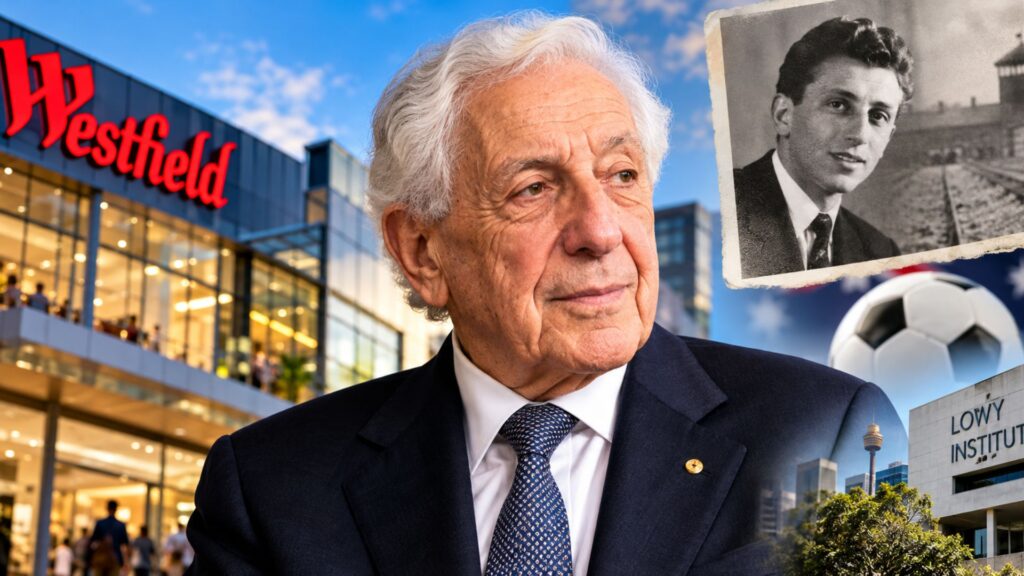
Frank Lowy is an Australian businessman, property developer and philanthropist best known for co-founding Westfield, one of the world’s major shopping centre businesses. Born in 1930 in what is now Slovakia, Lowy experienced the Holocaust and later immigrated to Australia, where he built an international retail property business. His career also includes leadership in Australian football, international affairs and philanthropic initiatives.

1. Frank Lowy: Quick Biography
| Detail | Information |
|---|---|
| Full name | Sir Frank Lowy |
| Date of birth | October 22, 1930 |
| Birthplace | Fiľakovo, formerly Czechoslovakia, now Slovakia |
| Nationality | Australian |
| Profession | Businessman, property developer, philanthropist |
| Known for | Co-founding Westfield |
| Business partner | John Saunders |
| Company | Westfield |
| Institute founded | Lowy Institute |
| Spouse | Shirley Lowy |
| Children | Peter, Steven and David Lowy |
| Main industry | Real estate and retail property |
| Notable role | Former chairman of Football Federation Australia |
| Honours | Companion of the Order of Australia; Knight Bachelor |
Biographical details are documented by the Australian National Portrait Gallery and the Lowy Institute.
National Portrait Gallery
+1
2. Early Life and Childhood
Frank Lowy was born on October 22, 1930, in Fiľakovo, a town that was then part of Czechoslovakia. He was raised in a Jewish family during a period of growing antisemitism and political instability in Europe.
During the Second World War, Lowy and his family faced the persecution of Jewish people under Nazi rule. His father was killed at Auschwitz, and Lowy spent part of his childhood in Budapest, Hungary, before the end of the war.
These experiences had a lasting influence on his life. After the war, he moved to Palestine, where he joined the Haganah and participated in the 1948 Arab-Israeli War. He subsequently made his way to Australia, arriving in 1952 to begin a new chapter of his life.
National Portrait Gallery
+1
3. Moving to Australia and Starting a Business
When Frank Lowy arrived in Australia in 1952, he had limited financial resources and had to establish himself in a new country. He initially worked in a factory before becoming involved in a small family business in Sydney.
In the 1950s, Lowy partnered with John Saunders, another immigrant and Holocaust survivor. Together, they developed a small retail business, including a delicatessen, before moving into property development.
Their business activities gradually expanded into commercial property. Recognising the potential of suburban retail centres, Lowy and Saunders began developing shopping facilities to serve Australia’s growing suburban population.
This transition from small-scale retail to property development laid the foundation for what would become the Westfield business empire.
National Portrait Gallery
+1
4. Founding of Westfield

Frank Lowy’s most significant business achievement was co-founding Westfield with John Saunders. The company opened its first shopping centre in Sydney’s western suburbs in 1959, and Westfield Development Corporation was listed on the Australian stock exchange in 1960.
The business expanded as suburban populations grew and shopping centres became important destinations for shopping, dining and entertainment. Lowy helped develop a retail property model that brought multiple retailers together in large, purpose-built shopping complexes.
Westfield expanded internationally, entering the United States in 1977. It subsequently developed shopping centres in New Zealand and the United Kingdom, establishing a substantial international presence.
Following Saunders’ departure from the partnership in 1987, Lowy continued to lead the business and expand its operations. Westfield became one of the world’s largest shopping centre groups, with Lowy serving as its executive chairman for approximately five decades.
National Portrait Gallery
5. Frank Lowy’s Net Worth
Frank Lowy’s wealth primarily comes from his involvement in commercial real estate, particularly his ownership interests in Westfield and the proceeds from its corporate transactions.
Net worth reference
Bloomberg estimate, May 2026
$12 billion
Reported by Bloomberg Billionaires Index; estimates fluctuate with asset valuations and investments.
Bloomberg’s profile attributes much of Lowy’s fortune to the proceeds from Westfield. The company’s acquisition by Unibail-Rodamco in 2018 was a major milestone in the history of his wealth. The Lowy family also sold its remaining stake in Scentre Group in 2019, according to Bloomberg’s analysis.
Frank Lowy
Net worth figures are estimates rather than confirmed disclosures of all personal assets and liabilities. For an article, it is important to specify the source and date of any figure.
6. Westfield’s Sale and Business Transition
In 2014, Westfield underwent a major restructuring that separated its Australian and New Zealand shopping centre operations into Scentre Group, while the international business continued under Westfield Corporation.
In 2018, Westfield Corporation was acquired by the French commercial property company Unibail-Rodamco in a transaction valued at approximately US$25 billion.
The deal marked a major transition in Lowy’s business career. After decades of leading Westfield, he stepped away from the company as the acquisition was completed. The transaction also represented the end of the Lowy family’s direct leadership of the international Westfield business.
Scentre Group
+1
7. Frank Lowy’s Family and Children
Frank Lowy is married to Shirley Lowy, and the couple have three sons: Peter, Steven and David. His family has been involved in business and philanthropic activities, with his sons taking on leadership roles in the family’s commercial interests.
Peter and Steven Lowy held senior positions within Westfield, while Steven became particularly prominent in the group’s executive leadership. The Lowy family has also maintained an involvement in charitable initiatives and public affairs.
Lowy’s family background and experiences during the Holocaust have also been an important part of his public story. He has spoken about the influence of his parents and the lessons he drew from his childhood.
National Portrait Gallery
+1
8. Role in Australian Football

Beyond real estate, Frank Lowy played a prominent role in Australian football. He served as chairman of Football Federation Australia, now known as Football Australia, from 2003 to 2015.
During his leadership, Australian football underwent significant structural changes. One major development was the establishment of the A-League in 2004, which introduced a new national professional competition.
Lowy also supported efforts to improve the organisation and international standing of Australian football. He was involved in the country’s bid to host the 2022 FIFA World Cup, although Australia did not win the hosting rights.
His tenure in football extended his influence beyond business and placed him at the centre of important developments in Australian sport.
National Portrait Gallery
+2
9. Philanthropy and the Lowy Institute

Frank Lowy has supported a range of philanthropic, educational, medical research and cultural initiatives. In 2003, he founded the Lowy Institute, an independent think tank focused on international policy, global affairs and Australia’s place in the world.
He has also supported medical research institutions, including the Lowy Cancer Research Centre at the University of New South Wales and the Victor Chang Cardiac Research Institute.
His philanthropic activities have extended to arts and cultural institutions. He served as a trustee of the Art Gallery of New South Wales and was involved in its governance.
In 2013, Lowy funded the restoration of a railway wagon used to transport Jewish people to Auschwitz, in memory of his father, who was murdered during the Holocaust. The restored wagon was installed at the former concentration camp as a memorial.
Lowy Institute
+2
10. Awards and Recognition
Frank Lowy has received several honours in recognition of his business achievements, philanthropy and contributions to Australian society.
- Companion of the Order of Australia (AC): Recognised for his contributions to business, sport and community service.
- Knight Bachelor (2017): Received a British honour in recognition of his business and philanthropic activities.
- Property Council of Australia Hall of Fame: Recognised for his contribution to the Australian property industry.
His career has also been documented in biographies, including books written by journalist Jill Margo.
Lowy Institute
+2
11. Frank Lowy’s Life and Public Activities in Recent Years
After the Westfield acquisition, Lowy shifted away from the daily management of the retail property business. He has continued to be associated with international affairs and philanthropy, including his involvement with the Lowy Institute and the Institute for National Security Studies in Israel.
In 2026, media coverage also discussed his public comments about antisemitism and social cohesion in Australia, reflecting his continued engagement with social and community issues. These reports provide additional context for understanding his activities beyond his former business leadership.
The Australian
+1
12. Frequently Asked Questions
Who is Frank Lowy?
Frank Lowy is an Australian businessman, property developer and philanthropist who co-founded Westfield, an internationally recognised shopping centre business.
How old is Frank Lowy?
Frank Lowy was born on October 22, 1930. He turned 95 in October 2025.
What is Frank Lowy famous for?
He is best known for co-founding Westfield with John Saunders and building it into a major international shopping centre group.
What is Frank Lowy’s estimated net worth?
Bloomberg estimated his net worth at approximately US$12 billion in May 2026. This is an estimate and can change over time.
Who are Frank Lowy’s children?
Frank Lowy has three sons: Peter, Steven and David Lowy. His sons have been involved in the family’s business activities.
What is the Lowy Institute?
The Lowy Institute is an independent Australian international policy think tank founded by Frank Lowy in 2003. It focuses on international relations, security and global affairs.
13. Conclusion
Frank Lowy’s journey from a childhood marked by the Holocaust to becoming the co-founder of one of the world’s major shopping centre businesses is a significant part of Australia’s business history. His work in commercial real estate, leadership in Australian football and support for medical research, education and international policy have shaped his public legacy. His story reflects decades of business development, international expansion and philanthropic involvement, making him a notable figure for readers interested in entrepreneurship and influential business leaders.
For readers of your English blog, Frank Lowy’s life offers insight into how an immigrant entrepreneur built an international business while also becoming involved in sport, public affairs and philanthropy.
Early Life and Childhood
Frank Lowy was born on October 22, 1930, in Fiľakovo, a town that was part of Czechoslovakia at the time. He grew up in a Jewish family during a period of increasing political tension and antisemitism in Europe. His childhood was deeply affected by the Second World War and the persecution of Jewish communities under Nazi rule.
During the Holocaust, Lowy experienced considerable hardship and displacement. His father was murdered at Auschwitz, a tragedy that profoundly affected his family. Lowy later spent time in Budapest, Hungary, before eventually moving to Palestine after the war.
In 1948, he participated in the Arab-Israeli War as a member of the Haganah. These early experiences shaped his outlook and influenced his determination to build a stable future. In 1952, Lowy immigrated to Australia, where he began a new life and gradually established himself in the business world.
Beginning of His Business Career
When Frank Lowy arrived in Australia, he did not have a large amount of money or an established business network. Like many immigrants, he had to work hard to adapt to a different culture and economic environment. He initially worked in a factory and later became involved in a small retail business in Sydney.
Lowy’s entrepreneurial journey took an important turn when he partnered with John Saunders, another immigrant. Together, they explored opportunities in retail and commercial property. Their early business activities included operating a delicatessen, which helped them understand the needs of local customers and the potential of retail locations.
Recognising the opportunities created by Australia’s expanding suburbs, Lowy and Saunders shifted their attention towards shopping centres. Their decision to invest in retail property eventually became the foundation of a business that would achieve international recognition.
Building the Westfield Business Empire
Frank Lowy’s most significant business achievement was co-founding Westfield with John Saunders. In 1959, they opened their first shopping centre in Blacktown, a suburb of Sydney. The centre provided a convenient location for shoppers and retailers, reflecting the growing demand for organised suburban shopping facilities.
Westfield Development Corporation was listed on the Australian stock exchange in 1960, supporting the company’s expansion. Over the following decades, Lowy helped transform Westfield from a local property venture into a major international shopping centre business.
The company expanded throughout Australia and New Zealand before entering international markets, including the United States in 1977 and later the United Kingdom. Its shopping centres became destinations for retail, dining, entertainment and other consumer services.
Lowy’s business strategy focused on developing and managing large shopping complexes in locations with strong commercial potential. His leadership helped establish Westfield as a major name in the global retail property industry.
Frank Lowy’s Net Worth and Financial Success
Frank Lowy built much of his wealth through commercial real estate and his long-term involvement with Westfield. As the company expanded internationally, its property portfolio and business operations grew substantially, contributing to his financial success.
Lowy’s net worth has been estimated in the billions of US dollars by major wealth publications. However, his exact wealth varies depending on property valuations, investments and financial market conditions. His fortune is closely associated with Westfield’s development, restructuring and eventual sale.
In 2018, Westfield Corporation was acquired by Unibail-Rodamco in a multibillion-dollar transaction. The deal represented a significant milestone in Lowy’s career and marked a transition away from the business he had spent decades building. His achievements demonstrate the financial opportunities associated with long-term investment, commercial development and international expansion.
Family, Wife and Children
Frank Lowy is married to Shirley Lowy, and they have three sons: Peter, Steven and David. His family has played an important role in his personal and professional life, with his children becoming involved in various business and philanthropic activities.
His sons Peter and Steven held senior positions in the Westfield business, contributing to its management and strategic direction. The Lowy family has maintained interests in business, charitable activities and public initiatives.
Despite his international business success, Lowy has spoken about the importance of family and his personal experiences. His family’s history and the loss of his father during the Holocaust remain significant aspects of his life story.
Role in Australian Football
Frank Lowy also made a considerable contribution to Australian football. He served as chairman of Football Federation Australia from 2003 to 2015, helping oversee a period of organisational development and change.
One of the significant developments during his leadership was the establishment of the A-League in 2004. The competition created a new structure for professional domestic football and provided opportunities for clubs, players and supporters across Australia.
Lowy also supported Australia’s bid to host the 2022 FIFA World Cup. Although Australia was not selected as the host country, the campaign brought international attention to Australian football.
His involvement in the sport demonstrated his interests beyond property development and reflected his commitment to supporting major sporting institutions.
Philanthropy and the Lowy Institute
Frank Lowy’s contributions extend beyond business and sport. He has supported several charitable, educational, cultural and medical research initiatives. One of his most notable contributions was establishing the Lowy Institute in 2003.
The Lowy Institute is an independent Australian think tank that researches international relations, global security, economic affairs and foreign policy. It has become an established institution in Australian public debate and international policy research.
Lowy has also supported medical research, including the Lowy Cancer Research Centre at the University of New South Wales and initiatives associated with the Victor Chang Cardiac Research Institute. His philanthropic interests reflect a commitment to supporting scientific research and improving public understanding of important issues.
His efforts to preserve the memory of Holocaust victims have also been meaningful. He supported the restoration of a railway wagon used to transport Jewish people to Auschwitz, honouring the memory of his father and other victims.
Awards and Achievements
Frank Lowy’s contributions to Australian business, sport and society have been recognised through several honours. He was appointed a Companion of the Order of Australia in recognition of his service to business, sport and the community. He also received a British knighthood in 2017.
His professional achievements are particularly associated with the growth of Westfield, which became an internationally recognised retail property business under his leadership.
Lowy’s influence in Australian football and his philanthropic work have further established his public profile. His career is often discussed in relation to entrepreneurship, long-term business development and community involvement.
Frank Lowy’s Life After Westfield
Following the acquisition of Westfield Corporation in 2018, Lowy stepped away from his long-standing leadership role in the business. This marked the end of an important chapter in his professional life after decades of involvement in commercial property development.
In his later years, he has remained associated with philanthropic and international affairs initiatives. His interests in education, medical research, international relations and community issues continue to form part of his public legacy.
His life illustrates how business achievements can create opportunities to support wider social and charitable causes. From his early experiences in Europe to his career in Australia, Lowy has remained a prominent figure in the country’s business history.
Frequently Asked Questions
Who is Frank Lowy?
Frank Lowy is an Australian businessman, property developer and philanthropist best known for co-founding Westfield, a major international shopping centre business.
How old is Frank Lowy?
Frank Lowy was born on October 22, 1930. He is 95 years old as of 2026.
What is Frank Lowy famous for?
He is famous for co-founding Westfield with John Saunders and developing it into a major international retail property company.
Who is Frank Lowy’s wife?
Frank Lowy is married to Shirley Lowy. They have three sons: Peter, Steven and David.
What is Frank Lowy’s net worth?
Frank Lowy’s wealth has been estimated in the billions of US dollars. His exact net worth varies according to financial valuations, investments and the value of his assets.
What is the Lowy Institute?
The Lowy Institute is an independent Australian think tank founded by Frank Lowy in 2003. It focuses on international relations, foreign policy, economics and global security.
Conclusion
Frank Lowy’s journey from a childhood shaped by war and displacement to becoming a successful international businessman is a notable story of entrepreneurship and perseverance. His achievements in developing Westfield, supporting Australian football and contributing to philanthropy have made him a prominent figure in Australia’s business and public life. His career demonstrates the impact of long-term business vision and involvement in community initiatives. Readers of The Pure Magazine can learn from Frank Lowy’s life, which combines commercial achievement, personal resilience and a lasting commitment to philanthropy.
You May Also Readr https://thepuremagazine.co.uk/