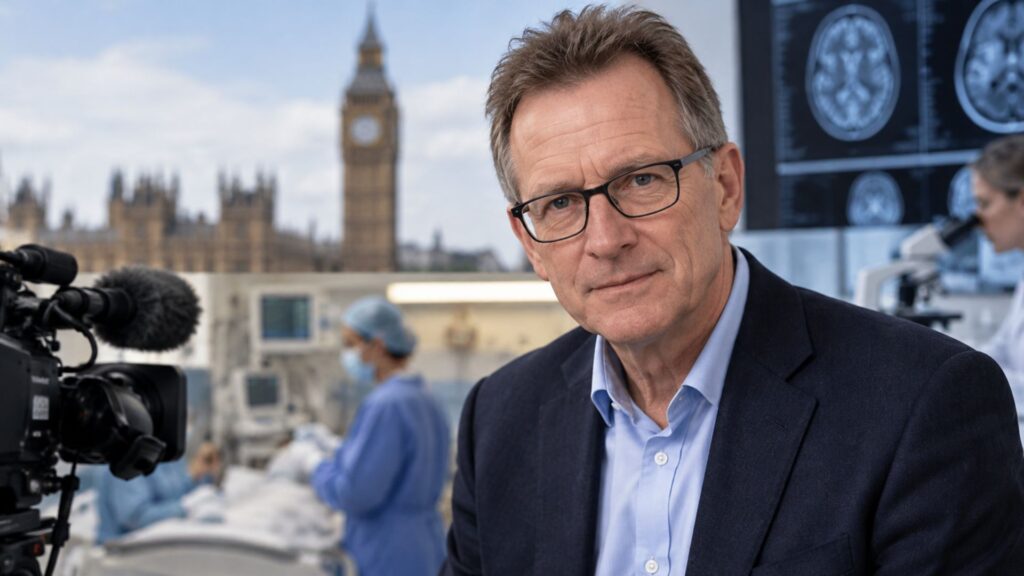

Fergus Walsh is one of the best-known medical journalists in British broadcasting, having spent decades reporting on healthcare, medical research, science and major public-health stories for the BBC. Known for explaining complex medical subjects in a clear and accessible way, Walsh has covered everything from infectious diseases and genetics to cancer, vaccines and medical technology. His long career has taken him from radio journalism to senior television reporting and eventually to the position of BBC Medical Editor.
Quick Bio of Fergus Walsh
| Detail | Information |
|---|---|
| Full Name | Fergus Walsh |
| Born | September 1961 |
| Birthplace | Leicester, Leicestershire, England |
| Profession | Journalist and Broadcaster |
| Employer | BBC |
| Known For | Medical and health journalism |
| BBC Career Began | 1984 |
| Medical Correspondent | From 2004 |
| Medical Editor | From 2020 |
| Education | University of Leeds and broadcast journalism training |
| Areas of Expertise | Medicine, healthcare, science and public health |
Early Life and Education
Fergus Walsh was born in Leicester, England, in September 1961. He later attended the Royal Grammar School in High Wycombe before continuing his education at the University of Leeds. His academic background was followed by specialist training in broadcast journalism at Falmouth, helping prepare him for a career that would eventually make him a familiar face and voice on British news coverage.
Walsh entered journalism at a time when radio remained an especially important part of British broadcasting. His early professional experience gave him the opportunity to develop the reporting and interviewing skills that would become central to his later work.
Beginning His BBC Career
Fergus Walsh joined the BBC in 1984, beginning a career that would eventually span more than four decades. During the early stages of his BBC career, he worked primarily in radio before moving into television reporting.
His journalism was not initially limited to medicine. He covered areas including Home Affairs and legal affairs and later became involved in political, diplomatic and education reporting. This broad experience gave him an understanding of how to investigate complicated subjects and communicate them to large audiences.
By the age of 26, Walsh had reportedly become one of the BBC’s youngest specialist correspondents. His early progression demonstrated his ability to handle demanding news stories and work across different areas of journalism.
Move Into Medical Journalism
Although Walsh had experience covering numerous areas of public life, medical journalism eventually became the defining focus of his career. In 2004, he became a BBC medical correspondent, allowing him to concentrate on healthcare, medical discoveries and developments that could have a direct impact on people’s lives.
Medical journalism requires more than simply reporting a new scientific discovery. It involves understanding research, questioning medical experts, explaining risks and benefits and making sure complicated information is understandable to ordinary viewers and readers. Walsh became particularly recognized for this ability.
His reporting has covered subjects including infectious diseases, cancer, genetics, ageing, obesity, antibiotic resistance, medical ethics and new medical technologies. His work has also taken him to numerous countries to report on health problems and medical developments around the world.
Becoming BBC Medical Editor
In 2020, Fergus Walsh became the BBC’s Medical Editor. The position represented a significant development in his career and placed him among the BBC’s leading journalists responsible for covering medical and public-health stories.
His appointment came during an especially important period for health journalism. The COVID-19 pandemic transformed the way people consumed medical information, while questions about vaccines, hospital capacity, treatments and scientific research became major international news stories.
As Medical Editor, Walsh was frequently involved in explaining rapidly changing medical developments to BBC audiences. His reporting helped put scientific announcements into context at a time when reliable health information was particularly important.
Fergus Walsh and COVID-19 Reporting
The COVID-19 pandemic became one of the most significant periods of Walsh’s professional career. He reported from hospitals and intensive-care environments and covered the development, testing and introduction of COVID-19 vaccines.
Reporting from medical environments during a public-health emergency presents considerable challenges. Journalists must communicate urgent information while avoiding unnecessary alarm and distinguishing established scientific evidence from speculation. Walsh’s experience in medical reporting enabled him to explain many of these developments in a straightforward way.
His pandemic coverage also illustrated the changing role of health journalists. Medical reporters were no longer simply covering stories about hospitals or scientific discoveries; they were helping audiences understand information that could influence everyday decisions and public policy.
Participation in Medical Research
One unusual feature of Fergus Walsh’s journalism is his willingness to participate in some of the medical research and procedures that he reports on. Rather than observing certain developments entirely from the outside, he has sometimes experienced them as a participant.
One notable example involved UK Biobank, a major long-term research project involving hundreds of thousands of participants. Walsh underwent detailed medical imaging as part of the project, allowing audiences to see how advanced scanning technologies can be used in large-scale research.
He has also reported on medical trials and other developments by putting himself in situations that allow viewers to better understand how research works. This approach has helped make complicated scientific subjects more tangible for the public.
Reporting Style and Influence
Walsh’s reporting style is strongly associated with clarity and accessibility. Medical stories can contain complicated terminology, statistics and scientific concepts that are difficult for general audiences to understand. His role involves translating that information into language that is accurate without becoming unnecessarily technical.
Over the years, his reporting has appeared across BBC television and radio, the BBC website and international BBC services. He has also contributed to programmes and special reports dealing with major medical issues.
His career demonstrates the importance of specialist journalism in an age when health information is increasingly available online. Audiences need journalists who can distinguish credible research from exaggerated claims and explain what new findings actually mean.
Awards and Recognition
Fergus Walsh’s long contribution to medical journalism has earned professional recognition. He has received awards associated with the Medical Journalists’ Association and has also received an honorary degree from Newcastle University.
Such recognition reflects the broader impact of his work. Medical journalism can influence public understanding of healthcare, research and scientific developments, and Walsh has spent much of his career working at the intersection of medicine and mainstream news.
Fergus Walsh’s Continuing Career
After more than four decades in journalism, Fergus Walsh remains closely associated with BBC medical reporting. His career has developed alongside major changes in both medicine and broadcasting, from traditional radio journalism to 24-hour television news and digital media.
The subjects he covers continue to evolve. Advances in genetics, artificial intelligence, cancer treatment, vaccines, medical imaging and personalized medicine are creating new challenges for health journalists. Walsh’s experience allows him to place these developments within a wider context and explain why they matter.
Conclusion
Fergus Walsh has built a remarkable career by combining journalism with a deep interest in medicine and science. From joining the BBC in 1984 to becoming its Medical Editor in 2020, he has reported on some of the most important healthcare stories of modern times. His work during the COVID-19 pandemic, his reporting on medical research and his willingness to participate in certain scientific projects have contributed to his distinctive reputation. For readers interested in journalism, medicine and the people who help explain complex scientific developments, Fergus Walsh’s career offers an illuminating example of specialist reporting. Readers looking for more engaging biographies and stories about notable people can explore The Pure Magazine — Stories Beyond the Ordinary, where informative articles bring interesting personalities and their journeys to a wider audience.
FAQs About Fergus Walsh
Who is Fergus Walsh?
Fergus Walsh is a British journalist and broadcaster best known for his long career with the BBC and his specialist reporting on medicine, healthcare and science.
When did Fergus Walsh join the BBC?
Fergus Walsh began his BBC career in 1984, initially working in radio before moving into television and specialist reporting.
What is Fergus Walsh known for?
He is particularly known for his medical journalism, including coverage of infectious diseases, cancer, genetics, vaccines, medical research and public-health issues.
When did Fergus Walsh become BBC Medical Editor?
Fergus Walsh became the BBC’s Medical Editor in 2020 after many years working as a medical correspondent.
Did Fergus Walsh report on COVID-19?
Yes. He played a prominent role in BBC coverage of the COVID-19 pandemic, including reporting from hospitals and covering vaccines, medical research and developments in the pandemic response.
Has Fergus Walsh participated in medical research?
Yes. He has participated in medical research and imaging projects, including work associated with the UK Biobank study, helping audiences understand medical research through first-hand experience.
What subjects has Fergus Walsh covered?
His work has included medicine, healthcare, infectious diseases, genetics, cancer, vaccines, medical technology, ageing, obesity, antibiotic resistance and medical ethics.
You May Also Readr https://thepuremagazine.co.uk/