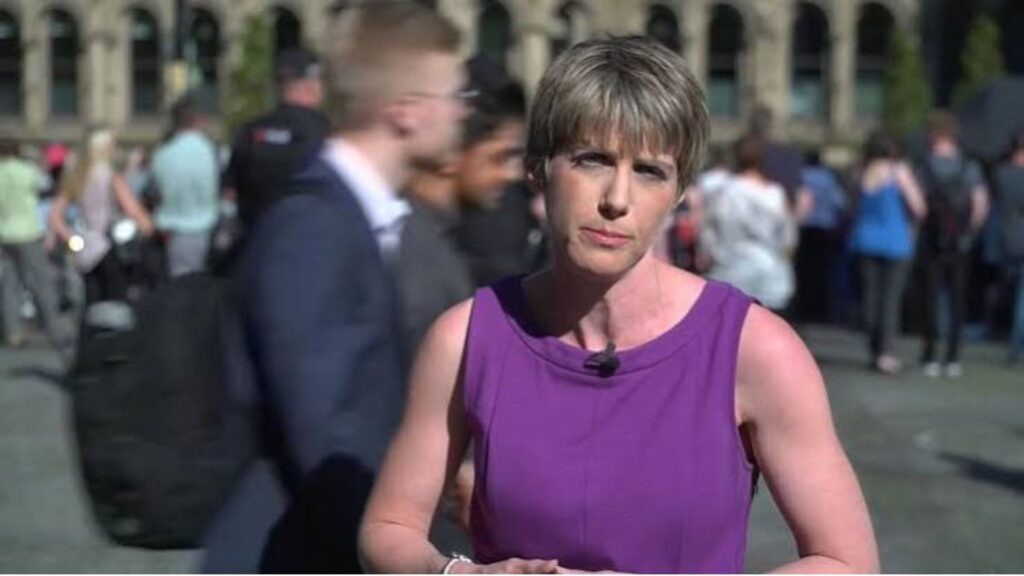

Judith Moritz is a respected British journalist, broadcaster and author best known for her work with the BBC. Over a career spanning decades, she has developed particular expertise in reporting complex criminal cases, public inquiries and stories involving major questions of justice and accountability. Her work has taken her from regional journalism to national and international broadcasting, with major coverage including Hillsborough, the Manchester Arena Inquiry and the Lucy Letby case. Today, she is a BBC News Special Correspondent and remains closely associated with detailed legal and investigative reporting.
| Quick Bio | Details |
|---|---|
| Full Name | Judith Moritz |
| Profession | Journalist, Broadcaster and Author |
| Known For | BBC News reporting and court journalism |
| Current Role | BBC News Special Correspondent |
| Former Role | BBC North of England Correspondent |
| Main Specialism | Court cases, investigations and public inquiries |
| Based In | Manchester, England |
| Major Coverage | Hillsborough, Manchester Arena, Lucy Letby and major northern England cases |
| Book | Unmasking Lucy Letby |
| Co-Author | Jonathan Coffey |
| Social Media | X/Twitter and Instagram |
Early Career and Path Into Journalism
Judith Moritz built her journalism career gradually, developing experience across regional broadcasting before moving into national news. She joined the BBC as a trainee and worked in regional television and radio before progressing toward national reporting. Her early experience helped establish the regional knowledge and courtroom expertise that later became central to her career.
For many years, Moritz was closely associated with BBC reporting from northern England. She spent around two decades working as the BBC’s North of England Correspondent, covering stories that frequently had national significance. Her reporting demonstrated the importance of regional journalism, particularly when major legal, political and social issues developed outside London.
Her professional career eventually led to her becoming a Special Correspondent for BBC News. In that role, she has contributed to major BBC television, radio and online programmes and has become particularly recognised for reporting complicated cases that require sustained attention rather than short breaking-news coverage.
A Specialist in Court Reporting
One of the defining features of Judith Moritz’s journalism is her experience covering complex court cases. Her professional biography states that she has spent around 25 years reporting on major court proceedings and inquiries.
Her work has included reporting on cases and events connected with Harold Shipman, Ian Brady, the Morecambe Bay disaster and the grooming scandals in Rochdale and Rotherham. She has also specialised in the legal aftermath of the Hillsborough disaster, a subject that involved decades of investigations, legal proceedings and continuing questions about accountability.
This type of reporting requires more than simply following courtroom developments. Court journalists need to understand complicated evidence, legal arguments, witness testimony and the wider background of a case. Moritz’s long experience in this field has made her a familiar figure when the BBC needs detailed coverage of major legal stories.
Reporting on Hillsborough
Hillsborough has been another significant part of Moritz’s professional career. The 1989 disaster resulted in the deaths of 97 Liverpool supporters and led to a lengthy campaign for justice by victims’ families and survivors.
Rather than being a story that ended with the original disaster, Hillsborough developed into a complex legal and institutional story involving investigations, inquests, police conduct and accountability. Moritz has specialised in covering this legal aftermath, giving her a detailed understanding of one of the UK’s most closely followed public-interest cases.
Her work on Hillsborough reflects a broader characteristic of her journalism: staying with major stories for years and explaining how investigations and legal processes develop over time.
Manchester Arena Inquiry
Moritz has also been closely involved in reporting the aftermath of the 2017 Manchester Arena bombing. The attack killed 22 people and raised important questions about security, intelligence and whether opportunities existed to prevent the tragedy.
She led BBC coverage of the Manchester Arena Inquiry, following proceedings that examined what happened before, during and after the attack. Her reporting helped audiences understand the evidence presented during a lengthy and highly significant public inquiry.
This type of reporting fits closely with Moritz’s wider speciality because public inquiries often involve large amounts of evidence and complicated institutional questions. They require journalists to connect individual testimony with broader findings and explain what those findings mean for the public.
Judith Moritz and the Lucy Letby Case
The Lucy Letby case became one of the most prominent assignments of Moritz’s career. Letby was convicted of murdering seven babies and attempting to murder seven others, and the case attracted enormous attention in Britain and internationally.
Moritz was one of the few television journalists given access to the courtroom for the duration of the trial. She spent almost a year observing proceedings and led the BBC’s national and international coverage. According to her professional biography, BBC content about the trial generated more than 26 million page views, while her live coverage of the verdicts and sentencing attracted more than five million followers.
Her work did not end with the conclusion of the trial. Moritz continued to report on developments surrounding the case, including questions about the evidence, the appeals process and the public inquiry into events at the Countess of Chester Hospital.
In 2026, she continued reporting on the subject, including coverage of the Thirlwall Inquiry and what its findings could mean for the continuing debate around the case.
Unmasking Lucy Letby
Moritz also brought her experience of the case to book publishing. She co-authored Unmasking Lucy Letby with fellow BBC journalist Jonathan Coffey.
Published in 2024, the book examines the Letby case, the investigation, the evidence presented at trial and the wider circumstances surrounding the former nurse’s career. It draws on interviews, documents and the authors’ extensive experience following the story.
The book later received significant recognition. It won the Best New Author award at the True Crime Awards 2025 and was highly commended for Book of the Year. It was also shortlisted for the CWA Daggers’ ALCS Gold Dagger for Non-Fiction.
The book illustrates how Moritz’s journalism extends beyond daily news reporting. Her work involves examining a story from multiple angles and presenting complicated information in a form that general readers can follow.
Awards and Professional Recognition
Throughout her career, Judith Moritz has received recognition for her journalism. Her professional biography lists awards from organisations including the Royal Television Society and the BT Press and Broadcast Awards.
Her reputation has been built primarily through sustained reporting rather than celebrity. She is known for taking on difficult stories, spending considerable time understanding them and communicating complicated developments clearly to a broad audience.
Personal Life
Moritz maintains a relatively private personal life compared with many television personalities. Public professional information states that she lives in Manchester with her family. She has also described herself as a slow but enthusiastic runner.
Although numerous websites publish claims about her age, exact birth date, relationships and other private details, these claims are not consistently supported by authoritative sources. For that reason, such information should be treated cautiously rather than presented as established fact.
Why Judith Moritz Is an Important Journalist
Judith Moritz represents a style of journalism that depends on persistence, accuracy and detailed knowledge. Her career demonstrates how a journalist can develop a specialist area while continuing to work across television, radio, online reporting, documentaries and books.
From Hillsborough and the Manchester Arena Inquiry to the Lucy Letby case, many of her biggest assignments have involved difficult questions about justice, institutional responsibility and the experiences of victims and their families.
Her ability to remain with a story long after the initial headlines have disappeared is one of the most notable aspects of her career. For audiences, this kind of journalism can provide valuable context that is often missing from fast-moving news coverage.
Judith Moritz’s career therefore extends beyond her identity as a BBC correspondent. She has become an experienced court reporter, investigative journalist and author whose work continues to focus on some of Britain’s most complex and consequential stories. For readers of The Pure Magazine, her career offers an interesting example of how persistence, specialist knowledge and careful reporting can shape a long-lasting presence in modern journalism.
FAQs About Judith Moritz
Who is Judith Moritz?
Judith Moritz is a British journalist, broadcaster and author who works as a Special Correspondent for BBC News. She is particularly known for reporting major court cases, public inquiries and investigative stories.
What is Judith Moritz known for?
She is known for her extensive BBC coverage of complex legal stories, including Hillsborough, the Manchester Arena Inquiry and the Lucy Letby case.
Is Judith Moritz a BBC journalist?
Yes. Judith Moritz is a BBC News Special Correspondent and has worked for the BBC for many years in regional, national and international journalism.
Did Judith Moritz write a book about Lucy Letby?
Yes. She co-authored Unmasking Lucy Letby with Jonathan Coffey. The book examines the case, investigation and evidence surrounding Lucy Letby’s convictions.
Where does Judith Moritz live?
Public professional information states that Judith Moritz lives in Manchester with her family.
What type of journalism does Judith Moritz specialise in?
Her main areas of expertise include court reporting, criminal cases, public inquiries, investigations and stories involving legal and institutional accountability.
You May Also Readr thepuremagazine.co.uk