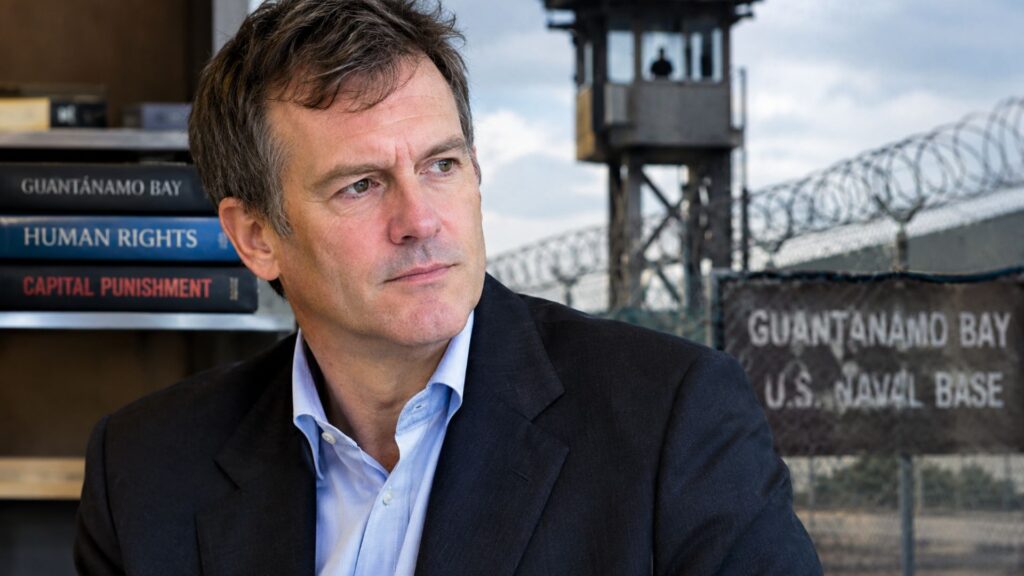

Clive Stafford Smith is a British-born lawyer and human-rights advocate whose career has taken him from death-penalty cases in the southern United States to some of the most closely watched detention cases of the modern era. He is particularly known for representing people who could not afford legal representation and for his work concerning detainees held at Guantánamo Bay. Over several decades, his career has focused on questions surrounding capital punishment, due process and access to legal representation. He also co-founded Reprieve, an organisation that became closely associated with these issues.
Quick Bio of Clive Stafford Smith
| Category | Details |
|---|---|
| Full Name | Clive Stafford Smith |
| Born | 1959 |
| Birthplace | Near Newmarket, Suffolk, England |
| Profession | Lawyer and human-rights advocate |
| Education | University of North Carolina; Columbia Law School |
| Known For | Death-penalty defence and Guantánamo Bay legal work |
| Organisation | Co-founder of Reprieve |
| Major Honour | OBE |
| Notable Books | Eight O’Clock Ferry to the Windward Side, Bad Men, The Far Side of the Moon |
| Main Areas of Work | Capital punishment, detainee rights and legal representation |
Early Life and Education
Clive Stafford Smith was born in 1959 near Newmarket in Suffolk. He attended Radley College, where he became head boy and developed an interest in public affairs. Rather than following the conventional route of attending Cambridge, he accepted a scholarship to the University of North Carolina, where he studied politics and African-American studies.
His education eventually led him toward law. He studied at Columbia Law School in New York and later qualified to practise law in the United States. His professional career would ultimately take him deep into the American criminal justice system, particularly in states where capital punishment remained an important part of the legal landscape.
Beginning a Career in Death-Penalty Law
After completing his legal education, Stafford Smith spent nine years working with the Southern Center for Human Rights. His work there included death-penalty cases and civil-rights matters.
The experience established the central theme of his legal career: providing representation to people who faced the most serious consequences but had limited financial resources. According to Reprieve’s biography, he later represented more than 300 prisoners facing execution in the southern United States.
In 1993, Stafford Smith moved to New Orleans and established the Louisiana Crisis Assistance Center. The nonprofit law office specialised in representing people facing capital charges who could not afford lawyers. His work often placed him opposite prosecutors in some of the most difficult criminal cases.
His approach was notable because he concentrated on defendants who were unable to pay for their own representation. The Guardian has described his long involvement in death-penalty defence as one of the defining features of his professional life.
Founding Reprieve
In 1999, Stafford Smith co-founded Reprieve with documentary filmmaker Paul Hamann. The organisation developed as a legal and human-rights group working on behalf of prisoners and people facing serious violations of their rights.
The organisation’s early work was strongly connected to death-penalty cases. It later expanded into other areas, including cases involving detention, torture and extraordinary rendition.
Stafford Smith’s connection with Reprieve became one of the most recognisable parts of his career. His legal background in the United States, combined with his growing involvement in international human-rights cases, gave the organisation a distinctive focus.
In 2000, he was appointed an OBE for humanitarian services. He subsequently received other awards and fellowships, including the Lannan Cultural Freedom Award in 2008.
Clive Stafford Smith and Guantánamo Bay
Perhaps the most internationally recognised chapter of Stafford Smith’s career began with his work concerning Guantánamo Bay.
After the detention facility was established following the September 11 attacks and the subsequent US-led war in Afghanistan, Stafford Smith became involved in legal efforts to obtain access to detainees. Reprieve’s biography says that in 2001 he joined other lawyers in seeking access to prisoners held at the facility.
The legal battle over whether detainees could have meaningful access to lawyers became a major issue. Eventually, lawyers were permitted to meet detainees under tightly controlled conditions.
Stafford Smith travelled repeatedly to meet clients and investigate their cases. The Guardian has reported on the restrictions surrounding these meetings, including limitations on what lawyers could record during conversations.
His work involved gathering information from detainees, communicating with their families and pursuing legal challenges concerning their detention. Reprieve states that his work helped secure the release of numerous Guantánamo prisoners.
He returned to Britain in 2004 and continued his legal and advocacy work from there. His involvement with Guantánamo became a major part of his public profile and led to extensive commentary, interviews and writing.
Books and Writing
Stafford Smith has also documented his experiences through books.
One of his best-known works is Eight O’Clock Ferry to the Windward Side: Seeking Justice in Guantánamo Bay. The book describes his experiences representing detainees and provides a personal account of the legal and human issues surrounding the prison camp.
He also wrote Bad Men: Guantánamo Bay and the Secret Prisons, examining detention and the wider system associated with the United States’ post-9/11 counterterrorism policies.
Another significant work is The Far Side of the Moon: Trials of My Father, published in 2022. Unlike his earlier books, this memoir places greater emphasis on his family background and his relationship with his father, while also connecting those experiences with his work representing a death-row prisoner.
His writing has therefore provided two different perspectives on his career: one focused on international detention and legal advocacy, and another more personal examination of the experiences that shaped him.
Later Work and Reprieve
Stafford Smith eventually moved away from his formal leadership role at Reprieve. The organisation announced in 2021 that he was leaving to pursue his own projects and independent activities. Reprieve said he had already stepped back from his formal role in 2018 and had continued as a consultant from 2019.
His departure did not mark the end of his involvement in legal and human-rights issues. Reprieve’s current biography says that he continues to work on cases involving Guantánamo detainees.
His career remains unusual because it has combined courtroom advocacy, international human-rights work, investigative research and public writing. He has spent much of his professional life working on cases involving people who were facing imprisonment or execution and who had limited ability to influence the legal system themselves.
Awards and Recognition
Stafford Smith’s work has received recognition from a range of organisations. His OBE was awarded in 2000 for humanitarian services. He has also received the Lannan Cultural Freedom Award and other honours and fellowships.
These awards form part of a broader public record of recognition for his legal and human-rights activities. At the same time, his work has often been controversial because it involved representing people accused of serious crimes and challenging government policies concerning detention and national security.
That combination of legal advocacy and controversy has made Stafford Smith a prominent figure in discussions about capital punishment, prisoners’ rights and the limits of state power.
Clive Stafford Smith’s Legacy
Clive Stafford Smith’s professional story is closely connected with some of the most difficult legal questions of recent decades. His work in the American death-penalty system established his reputation as a capital-defence lawyer, while his later involvement with Guantánamo brought his work into the international spotlight.
Whether working in a courtroom, meeting detainees, investigating cases or writing about his experiences, he has concentrated much of his career on access to legal representation and the treatment of people accused or convicted of serious crimes.
His career also illustrates how a lawyer’s role can extend beyond traditional courtroom advocacy. Through Reprieve, books and public commentary, Stafford Smith became an important participant in wider debates about justice, detention and capital punishment.
For readers interested in the people behind major legal and human-rights stories, Clive Stafford Smith’s career offers a detailed example of how one lawyer’s professional path became intertwined with some of the most significant legal controversies of his generation. The Pure Magazine continues to explore the lives, careers and stories of notable people whose work has shaped public conversations in Britain and beyond.
FAQs About Clive Stafford Smith
Who is Clive Stafford Smith?
Clive Stafford Smith is a British-born lawyer and human-rights advocate known particularly for death-penalty defence work in the United States and legal representation of detainees at Guantánamo Bay.
What is Clive Stafford Smith famous for?
He is best known for representing people facing the death penalty and for his work on behalf of detainees held at Guantánamo Bay. He is also a co-founder of Reprieve.
When did Clive Stafford Smith found Reprieve?
Stafford Smith co-founded Reprieve with Paul Hamann in 1999.
Where did Clive Stafford Smith study law?
He studied law at Columbia Law School in New York after studying politics and African-American studies at the University of North Carolina.
Has Clive Stafford Smith written any books?
Yes. His books include Eight O’Clock Ferry to the Windward Side, Bad Men: Guantánamo Bay and the Secret Prisons, and The Far Side of the Moon: Trials of My Father.
What is Clive Stafford Smith’s connection with Guantánamo Bay?
He became involved in legal efforts concerning detainees at Guantánamo Bay from the early 2000s and represented numerous prisoners held there.
What award did Clive Stafford Smith receive in 2000?
He was appointed an OBE in 2000 for humanitarian services.
Is Clive Stafford Smith still involved in legal work?
Reprieve’s current biography states that he continues to work on cases involving Guantánamo detainees, following his departure from the organisation’s formal leadership structure.
You May Also Readr https://thepuremagazine.co.uk/