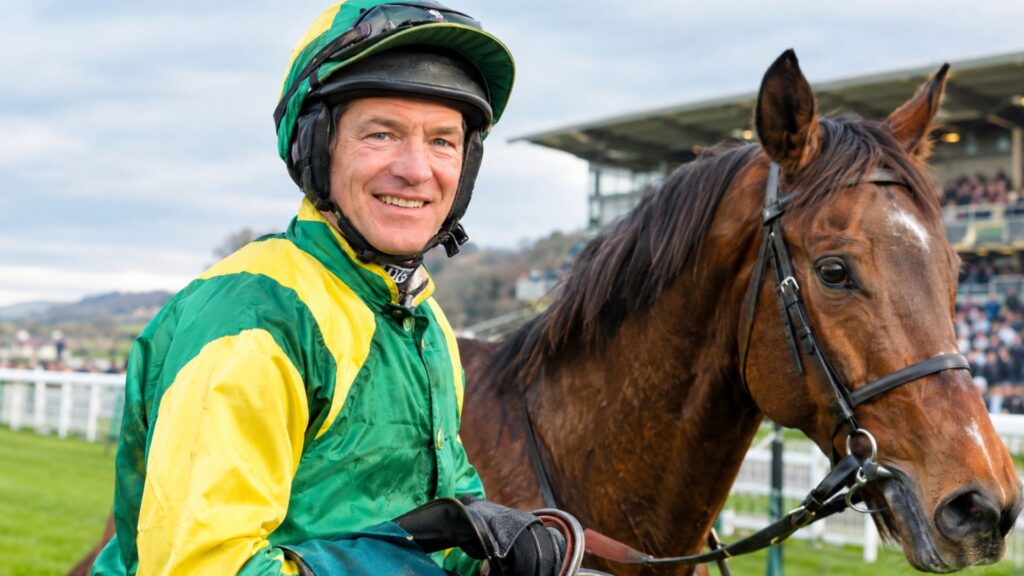

Peter Scudamore is one of the most distinguished names in British National Hunt racing. Born into a family with a strong connection to the sport, he went on to establish an extraordinary reputation of his own, becoming an eight-time champion jockey and one of the most successful riders of his generation. His career included thousands of rides, major victories at prestigious racecourses and a record-breaking partnership with trainer Martin Pipe.
Scudamore’s story is also about the evolution of a racing career beyond the saddle. After retiring from professional riding in 1993, he remained closely connected with horse racing through broadcasting, training and his work alongside trainer Lucinda Russell. His family has also continued to play an important role in the sport, ensuring that the Scudamore name remains closely associated with British National Hunt racing.
Quick Bio of Peter Scudamore
| Detail | Information |
|---|---|
| Full Name | Peter Scudamore |
| Date of Birth | June 13, 1958 |
| Birthplace | Herefordshire, England |
| Profession | Former National Hunt jockey, broadcaster and racing professional |
| Riding Career | 1978–1993 |
| Champion Jockey Titles | 8 |
| Career Winners | 1,678 |
| Best Recorded Season | 221 winners in 1988/89 |
| Cheltenham Festival Wins | 13 |
| Father | Michael Scudamore |
| Partner | Lucinda Russell |
| Most Famous Trainer Partnership | Martin Pipe |
| Racing Nickname | Scu |
Growing Up in a Racing Family
Peter Scudamore was born in Herefordshire on June 13, 1958, into a family that already had a significant place in British horse racing. His father, Michael Scudamore, was a successful National Hunt jockey whose career included victory in the Grand National.
Michael Scudamore won the 1959 Grand National on Oxo, one of the most famous races in the British racing calendar. His achievements naturally gave Peter an early connection to the world of racing.
However, Peter’s eventual success was not simply the result of his family background. He developed his own ability and reputation through years of competitive riding. He entered racing at a time when National Hunt jockeys faced demanding schedules and physically challenging conditions.
His natural ability, determination and tactical understanding soon became apparent. His progress through the sport was rapid, and his first winner under National Hunt rules came at Exeter on August 31, 1978, when he rode Rolyat for trainer Toby Balding.
He was only 20 at the time and was still riding as an amateur. That early success provided the foundation for a professional career that would eventually place him among Britain’s leading jump jockeys.
The Rise of a Champion Jockey
Scudamore quickly became a familiar figure on British racecourses. His ability to judge pace, position horses effectively and produce strong finishes helped him accumulate winners at an impressive rate.
His first champion jockey title came during the 1981/82 season. It was an unusual and memorable championship because Scudamore suffered a broken arm following a fall at Southwell late in the season.
His rival John Francome eventually caught him in the championship standings. The two riders finished level and shared the title.
The experience did not prevent Scudamore from developing into the dominant jockey of the following decade. His consistency became one of the defining features of his career.
He eventually won the champion jockey title eight times. Seven of those championships came consecutively from the 1985/86 season through 1991/92. This period established Scudamore as one of the most successful jockeys of the era.
His achievement is particularly significant when considered in the context of the racing calendar of the time. The structure of British jump racing was different from today’s schedule, and riders had fewer opportunities to accumulate winners across the year.
Scudamore nevertheless developed a remarkable ability to maintain a high level of success throughout each campaign.
The Record-Breaking 1988/89 Season
One of the most famous statistics associated with Peter Scudamore is his total of 221 winners during the 1988/89 season.
The figure became a landmark achievement in British National Hunt racing. Reaching such a total required not only an exceptional jockey but also access to a large number of competitive horses and a highly organised racing operation.
Scudamore’s success that season was closely connected to his partnership with Martin Pipe. Pipe had developed a highly successful training operation, and Scudamore became his principal jockey.
The relationship between the trainer and rider became one of the most important partnerships in British racing.
Scudamore’s riding style suited the horses trained by Pipe, while Pipe’s approach provided the jockey with a large number of opportunities. Their combined success helped transform expectations surrounding the number of winners a leading National Hunt jockey could achieve.
The 221-winner season became one of the clearest symbols of their partnership.
Peter Scudamore and Martin Pipe
The association between Peter Scudamore and Martin Pipe is central to any account of the jockey’s career.
Pipe was known for his analytical and highly systematic approach to training racehorses. Scudamore became the rider most closely associated with the stable during its period of major success.
The pair developed a strong professional relationship based on preparation, race planning and an understanding of individual horses.
Scudamore ultimately rode hundreds of winners for Pipe, with the Jockey website recording 792 winners for the trainer. Their association included victories with several notable horses.
Among the horses associated with Scudamore and Pipe were Bonanza Boy, Carvill’s Hill and Granville Again.
The partnership was important not only because of the number of races they won but also because it represented an influential period in British National Hunt racing.
Pipe’s training operation became renowned for producing large numbers of winners, while Scudamore’s riding helped turn many of those opportunities into race victories.
Their relationship continued to be one of the defining professional associations of Scudamore’s career.
Success at the Cheltenham Festival
The Cheltenham Festival is one of the most important events in National Hunt racing, and Scudamore enjoyed substantial success at the meeting.
He recorded 13 Cheltenham Festival victories during his career.
Among his most important victories was the 1987 Queen Mother Champion Chase, which he won aboard Pearlyman.
The following year brought another major Festival success when Scudamore partnered Celtic Shot to victory in the Champion Hurdle.
The Champion Hurdle is one of the most prestigious races for two-mile hurdlers, and winning it placed Scudamore among the leading riders associated with the race.
He won the Champion Hurdle again in 1993 with Granville Again, trained by Martin Pipe. The victory was particularly memorable because it came during the final season of Scudamore’s riding career.
His 13 Festival victories demonstrate the consistency of his performances at one of the most competitive meetings in the racing calendar.
The Major Prizes He Did Not Win
Despite an exceptional list of achievements, there were two major races that Scudamore never won: the Grand National and the Cheltenham Gold Cup.
The absence of the Grand National is particularly interesting because his father, Michael Scudamore, had won the race in 1959.
The Grand National is one of the most unpredictable races in the sport, involving a large field, demanding fences and a long-distance test of both horse and rider. Even highly successful jockeys can finish their careers without winning it.
Scudamore’s career nevertheless included significant success in other major staying races.
He won the Welsh Grand National four times and the Scottish Grand National twice. These victories demonstrated his ability to succeed over long distances and in demanding National Hunt conditions.
His career therefore cannot be measured solely by the races that remained outside his record. The range of major races he did win provides a broader picture of his achievements.
A Memorable Final Season
The 1992/93 season became the final chapter of Scudamore’s career as a professional jockey.
He continued to compete at the highest level and remained closely associated with Martin Pipe’s horses.
The highlight came at the Cheltenham Festival when he rode Granville Again to victory in the Champion Hurdle. It was his second victory in the race and one of the most memorable achievements of his final season.
Soon afterward, Scudamore decided to retire from race riding.
His final day came at Ascot on April 7, 1993, where he rode Sweet Duke to victory. He was 34 years old.
Retiring at that age meant that Scudamore left the saddle while still a highly successful and recognised jockey. His decision marked the end of a career that had lasted approximately 15 years under National Hunt rules.
Career Statistics and Achievements
Scudamore’s career statistics help explain why he remains such an important figure in British racing.
The Jockey website records 1,678 winners during his career. He also won the champion jockey title eight times and recorded 13 victories at the Cheltenham Festival.
His 221 winners in the 1988/89 season remain one of the most recognisable achievements associated with his name.
His record also includes major victories in the Champion Hurdle, Queen Mother Champion Chase, Welsh Grand National and Scottish Grand National.
Rather than specialising in only one type of race, Scudamore demonstrated versatility across hurdles and steeplechases and over different distances.
His ability to adapt to different horses and race situations was an important part of his success.
Life After Retirement
Retirement from riding did not mean retirement from horse racing.
Scudamore moved into broadcasting and became a familiar racing correspondent for the BBC. His experience as a jockey gave him first-hand knowledge of race riding, training methods and the challenges faced by competitors.
His broadcasting work allowed him to discuss racing from the perspective of someone who had spent many years at the highest level of the sport.
He also remained involved with racehorse training.
His later professional life became closely connected with Scottish trainer Lucinda Russell. The pair became partners in 2006 and have worked together within the racing industry.
Scudamore has been involved in Russell’s operation, contributing his experience and knowledge of racing while remaining close to the horses and day-to-day activities of the stable.
Russell’s training career has included major successes in the Grand National, including One For Arthur in 2017 and Corach Rambler in 2023.
Scudamore’s involvement with the stable therefore gave him another connection to one of British racing’s most famous races, even though he had never won it as a jockey himself.
The Scudamore Family Legacy
The Scudamore family’s relationship with horse racing extends across multiple generations.
Peter followed his father Michael into National Hunt racing and established a highly successful career of his own.
Peter’s son Tom Scudamore subsequently became a successful professional jockey. Tom built a long career in the saddle and became a familiar competitor at major British racing meetings.
Peter’s other son, Michael Scudamore, entered the training side of the sport.
The family’s involvement therefore covers riding, training and other areas of professional racing.
Peter’s career also became connected with the Pipe family through his work with Martin Pipe. Later, his son Tom rode for David Pipe, Martin Pipe’s son, extending the association into another generation.
Peter Scudamore’s Approach to Racing
Scudamore’s success was based on more than simply riding ability. His career developed during a period when jockeys were expected to have a detailed understanding of horses, race conditions and tactics.
His partnership with Martin Pipe demonstrated the importance of preparation and communication between jockey and trainer.
A successful jump jockey needs to judge pace carefully, position a horse efficiently and make decisions during a race that can change within seconds.
Scudamore’s large number of victories suggests how consistently he was able to perform those tasks at the highest level.
His record also reflects the importance of stable support. His success with Martin Pipe came within a powerful training operation that regularly supplied him with competitive horses.
Why Peter Scudamore Remains a Significant Name in Racing
Peter Scudamore’s career remains an important part of British National Hunt racing history.
His eight champion jockey titles provide one measure of his success. His 1,678 recorded winners provide another, while his 13 Cheltenham Festival victories show his ability to perform at one of the sport’s most important meetings.
The 221-winner season of 1988/89 is perhaps the statistic most closely associated with his career. It captured the extraordinary scale of his success during his partnership with Martin Pipe.
Yet his story is also notable because of the major races he did not win. The Grand National and Cheltenham Gold Cup remained missing from his list of victories.
That contrast makes his career particularly interesting. Racing success is often discussed through individual trophies, but Scudamore’s overall record demonstrates the value of sustained performance over many seasons.
His career also did not end when he stopped riding. Broadcasting, training and his continuing involvement in racing allowed him to remain part of the sport.
Peter Scudamore Today
Peter Scudamore continues to be associated with British horse racing through his professional relationships and long experience in the sport.
His work with Lucinda Russell has provided a further chapter in a career that began more than four decades ago.
From a young jockey beginning his career at Exeter to an eight-time champion, Cheltenham Festival winner and later racing professional, Scudamore has experienced several different sides of the sport.
His family connections have also helped keep the Scudamore name prominent in racing, with his father, sons and professional associations all contributing to the family’s place in National Hunt history.
For readers of The Pure Magazine, Peter Scudamore’s story offers a fascinating look at a racing career that combined family heritage, individual achievement, major partnerships and a successful transition beyond competitive riding.
His legacy is built not on a single race or moment but on sustained achievement over many years. The eight champion jockey titles, hundreds of major victories and record-breaking 1988/89 season remain central to the story of one of Britain’s most accomplished National Hunt jockeys.
FAQs About Peter Scudamore
Who is Peter Scudamore?
Peter Scudamore is a former British National Hunt jockey who became an eight-time champion jockey and recorded 1,678 winners during his riding career.
When was Peter Scudamore born?
Peter Scudamore was born on June 13, 1958, in Herefordshire, England.
How many times did Peter Scudamore win the champion jockey title?
He won the British National Hunt champion jockey title eight times.
How many winners did Peter Scudamore ride?
His career is recorded as having produced 1,678 winners.
What was Peter Scudamore’s record-breaking season?
His most famous statistical achievement came during the 1988/89 season, when he rode 221 winners.
Who was Martin Pipe to Peter Scudamore?
Martin Pipe was the trainer with whom Scudamore formed one of the most successful partnerships in British National Hunt racing. Scudamore became Pipe’s principal jockey and rode hundreds of winners for his stable.
Did Peter Scudamore win the Grand National?
No. Despite his father’s victory in the Grand National, Peter Scudamore never won the race himself.
Did Peter Scudamore win the Cheltenham Gold Cup?
No. The Cheltenham Gold Cup was another major race that he did not win during his career.
How many Cheltenham Festival winners did Peter Scudamore have?
He recorded 13 victories at the Cheltenham Festival.
When did Peter Scudamore retire?
He retired from race riding on April 7, 1993, at the age of 34.
What did Peter Scudamore do after retiring?
After retiring from riding, he worked in broadcasting and remained involved in horse racing through training and other professional roles.
Who is Peter Scudamore’s partner?
Peter Scudamore has been partnered with Scottish racehorse trainer Lucinda Russell since 2006.
Is Peter Scudamore still involved in horse racing?
Yes. He has continued to be involved in racing after his riding career, including his association with Lucinda Russell’s training operation.
Did Peter Scudamore have a racing family?
Yes. His father Michael Scudamore was a Grand National-winning jockey, while his sons Tom Scudamore and Michael Scudamore have also pursued careers in racing.
You May Also Readr https://thepuremagazine.co.uk/