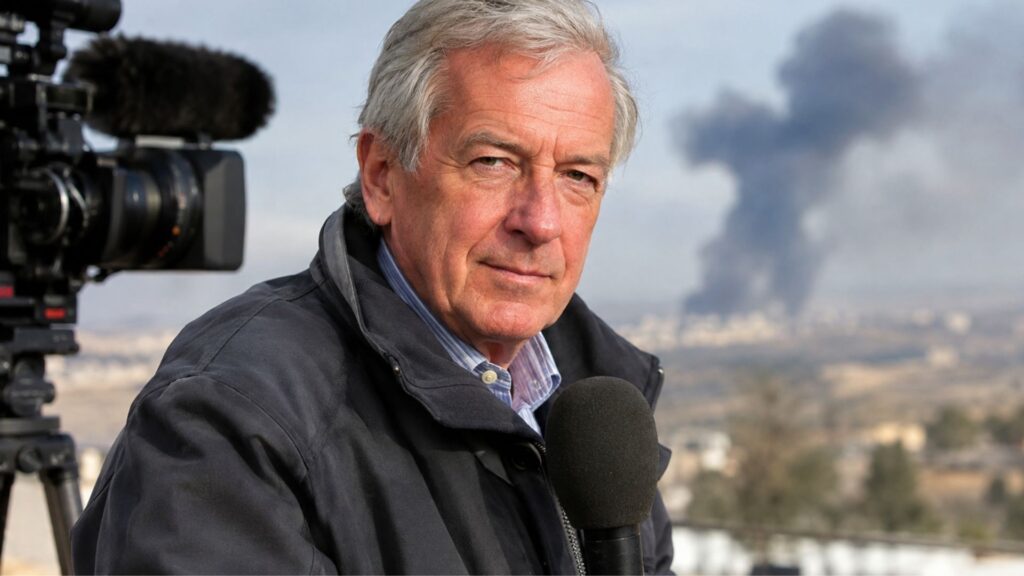

Tom Mangold is a British journalist, broadcaster, and author whose career has stretched across several decades of modern journalism. Best known for his long association with BBC current affairs programme Panorama, Mangold built a reputation through investigative reporting, war correspondence, political journalism, and writing about intelligence and international affairs. His career has taken him from Fleet Street newspapers to some of the world’s most significant conflict zones and into major investigations that attracted considerable public attention.
Born in Hamburg on 20 August 1934, Mangold moved to Britain with his family in 1939. His early life was shaped by the upheaval of Europe before and during the Second World War, and he eventually established himself in British journalism. After completing his education and later undertaking National Service with the Royal Artillery, he began his professional life in newspapers before moving into television.
Quick Bio
| Category | Details |
|---|---|
| Full Name | Tom Mangold |
| Date of Birth | 20 August 1934 |
| Place of Birth | Hamburg, Germany |
| Nationality | British |
| Profession | Journalist, Broadcaster, Author |
| Known For | BBC journalism and Panorama |
| Journalism Areas | Investigative reporting, war correspondence, intelligence |
| Books | Cold Warrior, The Tunnels of Cu Chi, Splashed! |
| Children | Three daughters |
| Years Active | More than seven decades |
Early Journalism Career
Mangold’s journalism career began in the newspaper world. He worked for publications including the Sunday Mirror and Daily Express, gaining experience in the fast-moving environment of Fleet Street. Newspaper journalism gave him an opportunity to develop the skills that would later become central to his television work, including interviewing, researching complicated stories, finding sources, and working under demanding deadlines.
His transition into broadcasting took his career in a new direction. Mangold joined the BBC and worked in television news before becoming a war correspondent. His reporting assignments took him to a range of countries and conflict zones, including Vietnam, the Middle East, Nigeria, Northern Ireland, Aden, and Afghanistan.
Working as a war correspondent exposed Mangold to some of the most difficult circumstances faced by journalists. His experiences in conflict zones also influenced his later writing, particularly his work on the Vietnam War and international security.
Career at the BBC and Panorama
During the 1970s, Mangold increasingly became involved in BBC current affairs. He worked on programmes including 24 Hours and Midweek before joining Panorama in 1976.
His association with Panorama became one of the defining parts of his career. The programme was already one of Britain’s best-known current affairs productions, and Mangold contributed to its tradition of investigative reporting. Over the years, he worked on numerous editions and investigated subjects involving politics, crime, intelligence, international affairs, and national security.
Television investigative journalism requires more than simply reporting an event. Reporters must establish facts, identify reliable sources, understand complex documents, conduct interviews, and present evidence clearly to viewers. Mangold’s work in this environment helped establish him as a journalist particularly interested in stories that required extensive research.
Interest in Intelligence and Security
Intelligence and national security became recurring subjects in Mangold’s journalism and writing. His interest in the world of espionage eventually led to several books examining intelligence operations and personalities.
One of his best-known works is Cold Warrior: James Jesus Angleton: The CIA’s Master Spy Hunter. The book examines James Jesus Angleton, the influential CIA counterintelligence officer whose career has long attracted historical interest.
Mangold also co-wrote The File on the Tsar with Anthony Summers. The book explored the mystery surrounding the fate of the Russian imperial family and became one of his internationally recognised works.
His books demonstrate the connection between his investigative journalism and historical research. Rather than focusing exclusively on contemporary news, Mangold frequently explored events involving intelligence agencies, political power, warfare, and international security.
The Tunnels of Cu Chi
Mangold’s experience as a war correspondent also informed The Tunnels of Cu Chi, which he wrote with John Penycate. The book examines the underground tunnel system used by Vietnamese forces during the Vietnam War.
The subject provided Mangold with an opportunity to combine firsthand knowledge of wartime reporting with detailed historical research. The tunnels became an important element of the conflict, serving as places for movement, shelter, communication, and military operations.
The book remains one of the notable examples of Mangold’s work dealing directly with military history and the realities of warfare.
Plague Wars
Another area of Mangold’s writing has involved biological warfare. He co-authored Plague Wars with Jeff Goldberg, examining the threat posed by biological weapons and the international security concerns surrounding them.
The subject reflects Mangold’s broader interest in threats that can operate beyond conventional military battlefields. Throughout his career, he has repeatedly explored subjects where politics, security, science, intelligence, and international conflict overlap.
Controversial Investigations
As with many investigative journalists who work on sensitive subjects, some of Mangold’s reporting attracted controversy and scrutiny.
One notable case involved a BBC report concerning Hemant Lakhani, a British businessman who was arrested in the United States after an undercover investigation involving an alleged attempt to sell a missile. The reporting generated disputes concerning aspects of the story, illustrating the challenges associated with investigative journalism involving undercover operations and intelligence-related material.
Mangold was also professionally connected with reporting surrounding David Kelly during the highly controversial political and media events of 2003. His familiarity with Kelly and his knowledge of contacts between Kelly and BBC journalists placed him within an important part of the journalism surrounding the affair.
These episodes are significant when examining Mangold’s career because they demonstrate the level of scrutiny that can accompany investigative reporting on politically sensitive subjects.
Memoir and Later Work
Mangold later documented his extraordinary professional journey in his memoir Splashed! A Life from Print to Panorama. The book reflects on his experiences in newspapers, broadcasting, war reporting, investigations, and the BBC.
Rather than presenting journalism as a simple succession of achievements, the memoir offers insight into the people, events, pressures, and experiences that shaped his professional life. It also provides a personal perspective on changes in British journalism over many decades.
Even after his principal BBC career, Mangold remained involved in discussions about journalism and the media. His later reflections have addressed the changing relationship between traditional journalism and newer forms of information, including the influence of social media.
Tom Mangold’s Legacy in Journalism
Tom Mangold’s career represents an unusually broad journey through British journalism. He experienced the newspaper era of Fleet Street, became a television news reporter, worked as a war correspondent, joined one of Britain’s leading current affairs programmes, and wrote extensively about intelligence, warfare, and international security.
His work also illustrates how investigative journalism has evolved. Stories once developed primarily through newspaper sources, confidential contacts, documents, and television interviews now exist within a much faster digital information environment. Mangold’s long career therefore provides a useful perspective on both the traditions and challenges of journalism.
For readers interested in journalism, espionage, military history, and broadcasting, Mangold’s career offers many different points of entry. His professional experiences and books provide a record of a journalist who spent decades investigating complicated subjects and reporting from challenging environments.
For more engaging biographies, journalism stories, and profiles of notable personalities, visit The Pure Magazine, where readers can discover stories beyond the ordinary.
FAQs About Tom Mangold
Who is Tom Mangold?
Tom Mangold is a British journalist, broadcaster, and author best known for his investigative journalism and long association with BBC current affairs programme Panorama.
When was Tom Mangold born?
Tom Mangold was born on 20 August 1934 in Hamburg, Germany.
What is Tom Mangold famous for?
He is particularly known for his work as an investigative journalist and war correspondent, as well as his many years working with the BBC’s Panorama.
Which books did Tom Mangold write?
His books include The File on the Tsar, The Tunnels of Cu Chi, Cold Warrior, Plague Wars, and his memoir Splashed! A Life from Print to Panorama.
Did Tom Mangold work as a war correspondent?
Yes. During his journalism career, Mangold reported from several conflict zones and international hotspots, including Vietnam, the Middle East, Nigeria, Northern Ireland, Aden, and Afghanistan.
What is Tom Mangold’s connection with Panorama?
Mangold joined Panorama in 1976 and became a prominent investigative reporter associated with the programme for many years.
What is Splashed! about?
Splashed! A Life from Print to Panorama is Mangold’s memoir, covering his experiences in newspapers, television, war reporting, investigative journalism, and his BBC career.
You May Also Readr https://thepuremagazine.co.uk/