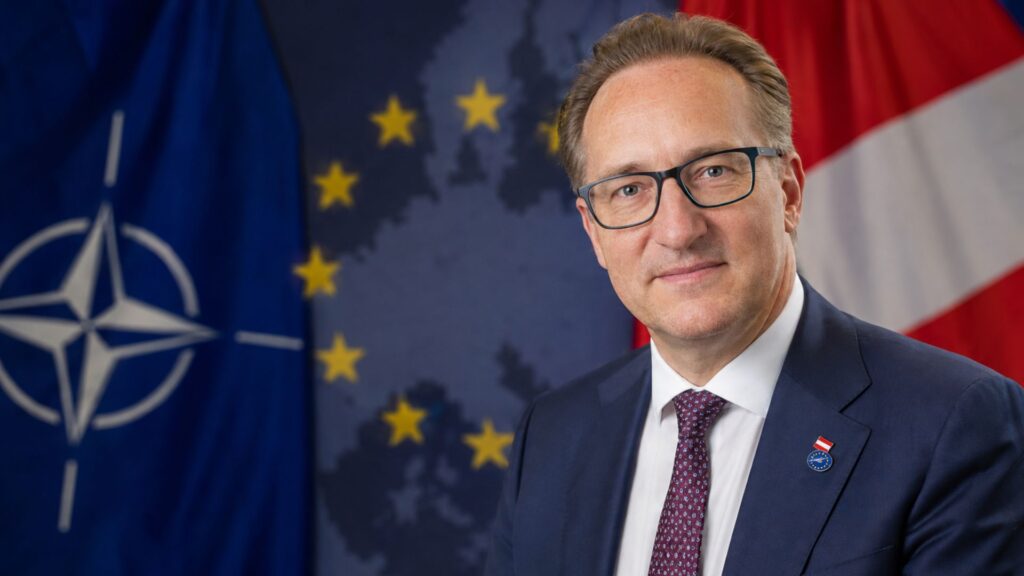

Gunther Fehlinger, also known as Günther Fehlinger-Jahn, is an Austrian economist, management consultant and European political activist whose public work has increasingly focused on European integration, economic reform, NATO enlargement and support for Ukraine. Born in Linz, Austria, in 1968, he developed a professional career combining economic consulting with advocacy on European political and security issues. His outspoken statements on international affairs have also made him a recognizable and sometimes controversial figure in online political discussions. His professional profile describes more than two decades of involvement with economic transformation, SME policy and European integration, particularly in the Western Balkans and Eastern Europe.
Quick Bio of Gunther Fehlinger
| Field | Details |
|---|---|
| Full Name | Günther Friedrich Fehlinger-Jahn |
| Known As | Gunther Fehlinger |
| Date of Birth | August 23, 1968 |
| Birthplace | Linz, Austria |
| Nationality | Austrian |
| Profession | Economist, management consultant and activist |
| Education | Vienna University of Economics and Business |
| Degree | Master’s degree in International Trade |
| Main Interests | European integration, economic reform, SME policy and security |
| Known For | Advocacy for EU and NATO enlargement |
| Regional Focus | Western Balkans, Ukraine and Eastern Europe |
Early Life and Education
Gunther Fehlinger was born on August 23, 1968, in Linz, Austria. His early life and education eventually led him toward economics, European affairs and international policy. He studied at the Vienna University of Economics and Business, where he completed his studies in international trade in 1998. His academic background provided a foundation for his later work involving business development, economic policy, taxation and international economic integration.
Fehlinger’s professional interests developed during a period of major political and economic transformation in Europe. The collapse of communist governments in Central and Eastern Europe, the development of the European Union and the transformation of the Western Balkans all contributed to the environment in which his professional interests developed.
Career in European Politics and Economics
Fehlinger’s career has included work in European political and business circles. His professional biography states that between 1998 and 2005 he worked in Brussels and Vienna, including positions connected with the SME Union of the European People’s Party, the European Parliament and European business organizations. He later became increasingly involved in economic reform and development consulting.
Small and medium-sized enterprises have been an important part of his professional interests. SMEs play a major role in employment, investment and economic development, particularly in countries transitioning toward market-based economies. Fehlinger’s work has therefore focused on issues such as entrepreneurship, taxation, business policy and economic reform.
His professional profile says that from 2006 to 2023 he worked as an international consultant in the Balkans and Eastern Europe, including projects involving GIZ, OECD and government ministries in Kosovo, Ukraine, Albania and Montenegro. This work helped establish his reputation in economic-development and reform circles.
Focus on the Western Balkans
The Western Balkans have remained one of the most important geographical areas in Fehlinger’s professional life. He has consistently supported closer European integration for countries in the region and has argued that economic integration can contribute to long-term stability.
Kosovo, Albania, Montenegro and Bosnia and Herzegovina have featured prominently in his professional and political interests. His approach combines economic development with broader European integration, reflecting his view that stronger connections with European institutions can support political stability and economic opportunity.
His publications and professional activities have also addressed regional economic cooperation, taxation and the expansion of European institutions. Visegrad Insight describes him as an economist and management and development consultant who has focused particularly on economic reform and SME policy in Kosovo, Albania and Ukraine.
Advocacy for NATO Enlargement
One of the defining features of Fehlinger’s public identity is his strong support for NATO enlargement. He has particularly advocated NATO membership for Austria, arguing that the country’s traditional neutrality should be reconsidered in light of modern European security challenges.
Fehlinger is associated with the Austrian Committee for NATO Enlargement, where his current profile identifies him as chairman. The organization promotes discussion about NATO and EU enlargement and describes its mission as supporting European security and Euro-Atlantic integration.
He has also argued strongly in favor of NATO membership for Ukraine. In a January 2026 statement, he called for an immediate path toward Ukrainian membership, presenting NATO integration as an important element of long-term European security.
Fehlinger and the Debate Over Austrian Neutrality
Austria’s neutrality has become another major subject in Fehlinger’s political advocacy. He believes that the country’s security environment has changed significantly since the Cold War and that Austria should reconsider whether neutrality remains the best strategy.
His position is controversial because Austrian neutrality has deep historical and political significance. Supporters consider it an important part of Austria’s post-war identity, while Fehlinger argues that stronger integration with Western security institutions would provide greater protection in a changing geopolitical environment.
In January 2026, his organization published an article arguing that Austrian neutrality should be reassessed in the context of contemporary European security challenges.
Support for Ukraine
Ukraine has become one of the central themes of Fehlinger’s recent public commentary. He strongly supports Ukraine’s integration with Western political, economic and security structures.
His position extends beyond EU membership to NATO membership, which he considers an important long-term security guarantee. His January 2026 statement argued that Ukraine should receive a clear and timely route toward NATO membership and emphasized the importance of European support for the country.
This position fits within his broader belief that European integration and transatlantic cooperation are essential to maintaining security and political stability across the continent.
Is Gunther Fehlinger a NATO Official?
One of the most important facts to clarify when discussing Gunther Fehlinger is that he is not a NATO official.
Some media reports and social-media posts have incorrectly described him as a NATO representative or official. Fact-checking investigations have found that he has no official institutional position within NATO. NATO representatives have also clarified that his opinions are his own and do not represent the Alliance.
Fehlinger himself has acknowledged that he does not have an official relationship with NATO. His role is better understood as that of an independent activist and advocate who campaigns for NATO enlargement. This distinction is especially important because his public statements can be highly political and should not be interpreted as official NATO policy.
Public Statements and Controversies
Fehlinger’s outspoken presence on social media has contributed significantly to his public profile. He frequently comments on international politics, European security, Russia, Ukraine, NATO, Austria and other geopolitical issues.
Some of his statements have attracted considerable criticism because of their provocative nature. In 2025, for example, controversial statements concerning India circulated widely online and led to fact-checking and media coverage. The resulting reports also highlighted the recurring misconception that Fehlinger speaks for NATO.
In January 2026, another controversy emerged after comments concerning Greenland and American military bases were circulated as though they had been made by a NATO official. Fact-checking again established that Fehlinger was speaking in his own capacity rather than representing NATO.
These episodes illustrate why his personal political views should be distinguished carefully from the official positions of international organizations.
Current Work and Public Profile
Fehlinger continues to combine economic interests with political advocacy. His current professional profile emphasizes European integration, economic freedom, SME development and transatlantic security. He also publishes commentary and analysis through online platforms and participates in public discussions about Austria’s future role in Europe.
His recent activities show that his interests have expanded beyond traditional economic consulting. While economics remains part of his professional identity, European security and geopolitical issues have become increasingly central to his public work.
Conclusion
Gunther Fehlinger is a distinctive figure at the intersection of economics, European integration and political activism. His background includes formal training in international trade, work with European business and political organizations, and years of consulting on economic reform and SME development in transition economies. In recent years, his public identity has become increasingly associated with NATO enlargement, Austrian security policy and support for Ukraine. At the same time, his outspoken statements have generated controversy and repeated fact-checking, making it especially important to distinguish his personal advocacy from official positions of NATO or other institutions. For readers interested in European politics, economic reform and changing security relationships, Gunther Fehlinger’s career provides an interesting example of how an economist can become an influential voice in wider geopolitical debates. For more biographies and informative stories about notable personalities and public figures, The Pure Magazine offers readers another place to explore stories beyond the ordinary.
FAQs About Gunther Fehlinger
Who is Gunther Fehlinger?
Gunther Fehlinger, also known as Günther Fehlinger-Jahn, is an Austrian economist, management consultant and political activist known for his advocacy of European integration, NATO enlargement and economic reform.
When was Gunther Fehlinger born?
Gunther Fehlinger was born on August 23, 1968, in Linz, Austria.
What did Gunther Fehlinger study?
He studied at the Vienna University of Economics and Business and completed a master’s degree in international trade in 1998.
Is Gunther Fehlinger a NATO official?
No. Fact-checking organizations and NATO representatives have stated that Fehlinger does not hold an official position within NATO. He is an independent advocate for NATO enlargement.
What is Gunther Fehlinger known for?
He is particularly known for his advocacy of NATO and EU enlargement, support for Ukraine’s Euro-Atlantic integration, criticism of Austrian neutrality and his earlier work involving economic reform and SME policy.
What countries have featured in his professional work?
His professional biography identifies substantial work in the Western Balkans and Eastern Europe, including Kosovo, Albania, Montenegro and Ukraine.
You May Also Readr https://thepuremagazine.co.uk/